
Herp Update: Current Activity, Colonization, Permanent Ponds, and Life on the Edge

Current Activity
All our amphibian and reptile species in Vermont are now active. The early spring-breeding amphibians, such as Spotted, Blue-spotted, and Jefferson Salamanders, and Wood Frogs, have left their breeding waters and are now back up in the woods. Later-breeding amphibians such as American Toads and Gray Treefrogs will be heard calling when warmer weather returns. Spring Peepers, on the other hand, were calling from wetlands back in April and will continue calling into June. Speaking of Spring Peepers, we still need either photos or recordings of Spring Peepers from Andover, Avery’s Gore, Glastenbury, St. Albans City, and Stratton.
Snakes have left their dens, and turtles are basking. Sunny days in spring are the best days to see basking turtles since the water is still cold and the vegetation is not fully grown or leafed out. There are still eighteen towns in Vermont from which we have never had reports of Painted Turtles. Please keep your eyes open and camera ready for basking turtles. A zoom lens is helpful.
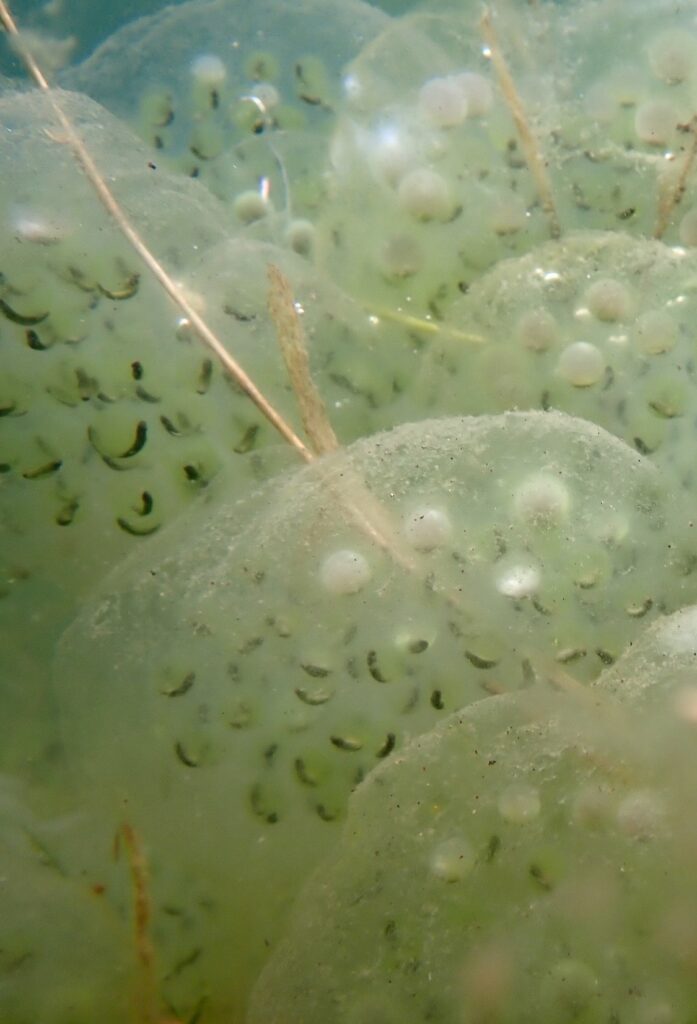
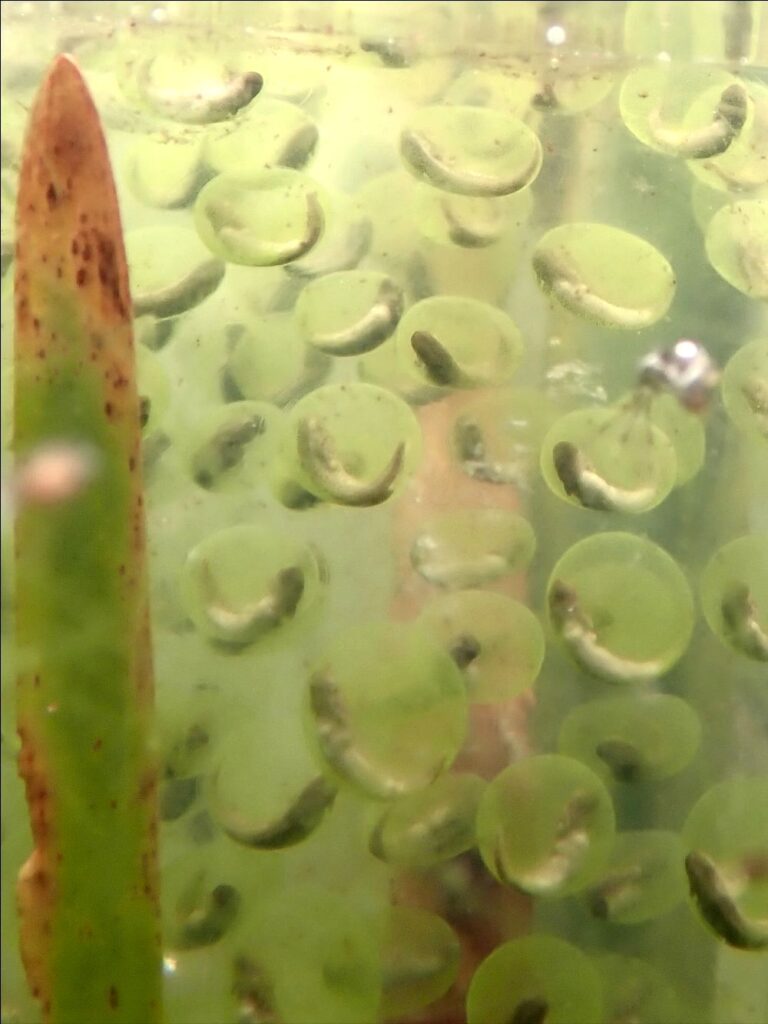
At the amphibian ponds we monitor, the Wood Frog egg masses have all hatched and fallen apart. Spotted Salamander egg masses, however, are still visible, and most are filled with algae or dusted with silt. Erin Talmage took the three photos below with an underwater camera. The top one shows a group of Spotted Salamander egg masses and their developing embryos. The middle photo is a closer view of the embryos, and the bottom one shows a larval Spotted that must have hatched last year but overwintered in the pond. Since these egg masses were deposited in a permanent pond, staying in the pond for the first winter is an option. Still, most Spotted Salamander larvae leave their natal ponds in the late summer or fall of the year that they were laid.

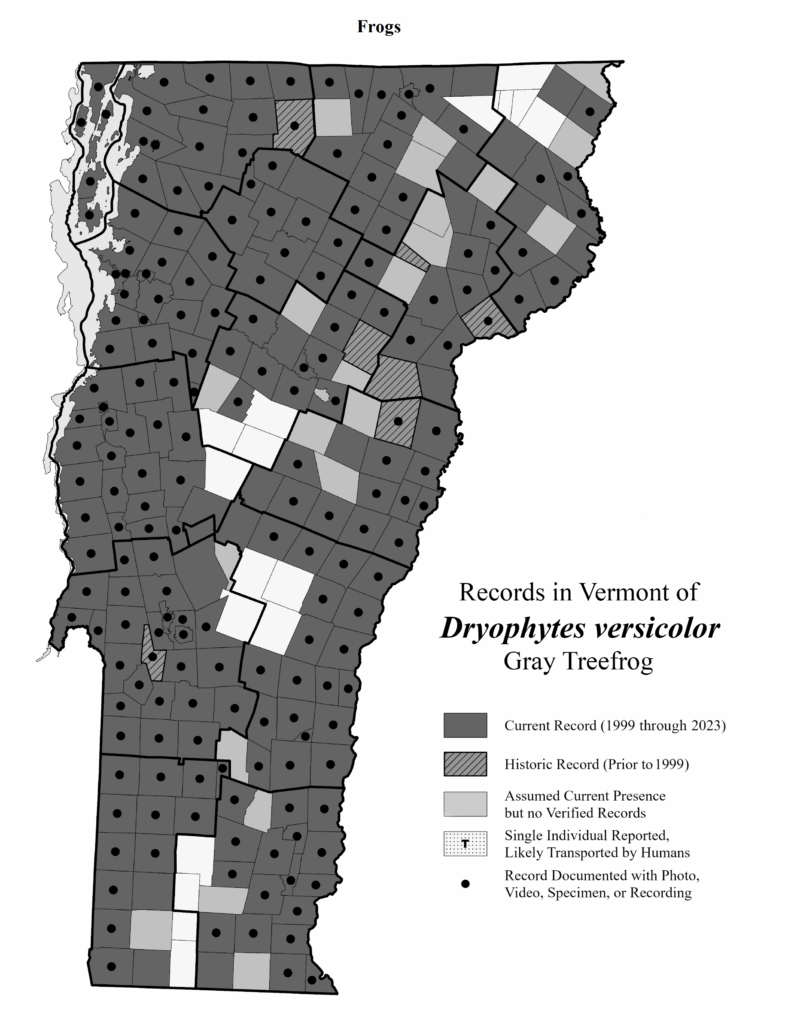
Gray Treefrogs have been on the move, and on the warmest days, a few have even been heard calling. Melissa Lee took the photo below in Brattleboro. This species has never been reported from two dozen towns in Vermont. They may be genuinely missing from some of the highest elevation and northern latitude towns, but the towns shown in gray in our map below should have them. If you hear or see one, please photograph or record it and report it.

Most snakes are now in their summer territories. We have received a few reports of Central Ratsnakes and Eastern Milksnakes crossing roads or back in their favorite barns, sheds, and wood piles.
The unusual photo below was taken by Phoebe Chestna last week in Sudbury. It shows a Broad-winged Hawk that apparently grabbed a Central Ratsnake, but the ratsnake was not giving up without a fight. At the time the photo was taken, the battle was at a stalemate, but she reports that they both have since disappeared. My guess is that the hawk eventually killed the snake.

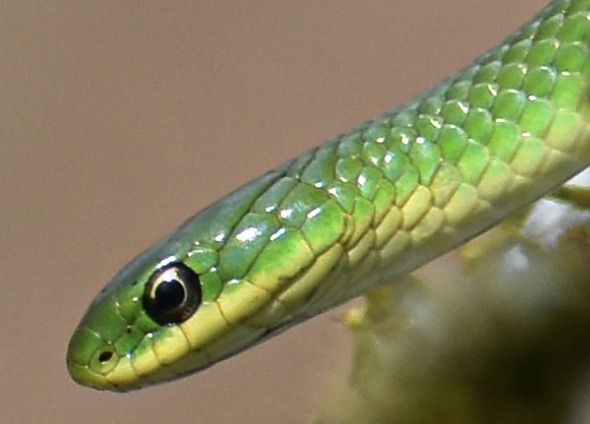
The great photo below (top) of the rare Eastern Ribbonsnake was taken by Grace C. in Poultney. Notice the bright white lip, and the white vertical line in front of the eye. Both of these field marks are very useful in distinguishing an Eastern Ribbonsnake from the common and widespread Common Gartersnake. The Smooth Greensnake photo (bottom) was taken by Cal Bryer in Goshen. Snakes other than Common Gartersnakes remain poorly reported in many towns.

Colonization, Permanent Ponds, and Life on the Edge
We have been monitoring amphibian breeding populations in four ponds in Lincoln for almost three decades as part of the Colby Hill Ecological Project. Every other spring, we make weekly visits to count the number of egg masses of Wood Frogs and Spotted Salamanders in each pond. These are all man-made permanent ponds, but they are very productive, largely because they are fish-free. In 2021, a fifth pond was created about 40 yards away from one of the older ponds. This pond is semi-permanent and has dried up at least one summer since it was built. Wood Frogs, Spotted Salamanders, and American Toads successfully reproduced in the newly dug pond during the first spring after it was created. Eastern Newts and Green Frogs were also seen in the pond in 2022, but we don’t know if they successfully produced young.
That first spring (2022), the Wood Frogs deposited 32 egg masses in the new pond, and we estimated that there were roughly 21,300 tadpoles present in the pond on May 10 after all the eggs were hatched. That averages 656 eggs per mass that survived at least to the tadpole stage. Wood Frog females usually lay only one mass, and that mass may have anywhere from 500 to 2000 eggs. If this group of egg masses generates 64 adults (32 females and 32 males), that suggests that the other 21,236 tadpoles will either end up as food for a predator or die of other causes. Life is risky for tadpoles and young frogs. Their energy and nutrients are spread widely.


