Herp Update: Vermont Edition, Data Gaps Filled, Four-toed Salamanders

Vermont Edition, VPR this Wednesday
Herpers, for many years, I have been a guest on Vermont Public Radio’s (VPR) Vermont Edition for a spring herpetology program. This started when Jane Lindholm was host and now continues with Mikaela Lefrak. This is a live show, and listeners are encouraged to call in or send an email before or during the program. This year it is scheduled for Wednesday, April 15, from Noon to 1 PM. Please call in with your questions and stories. The phone number is 1-800-639-2211, and their email is vermontedition@vermontpublic.org. I would love to hear from you. The program gets rebroadcast at 7 PM on the same evening.
Data Gaps Filled
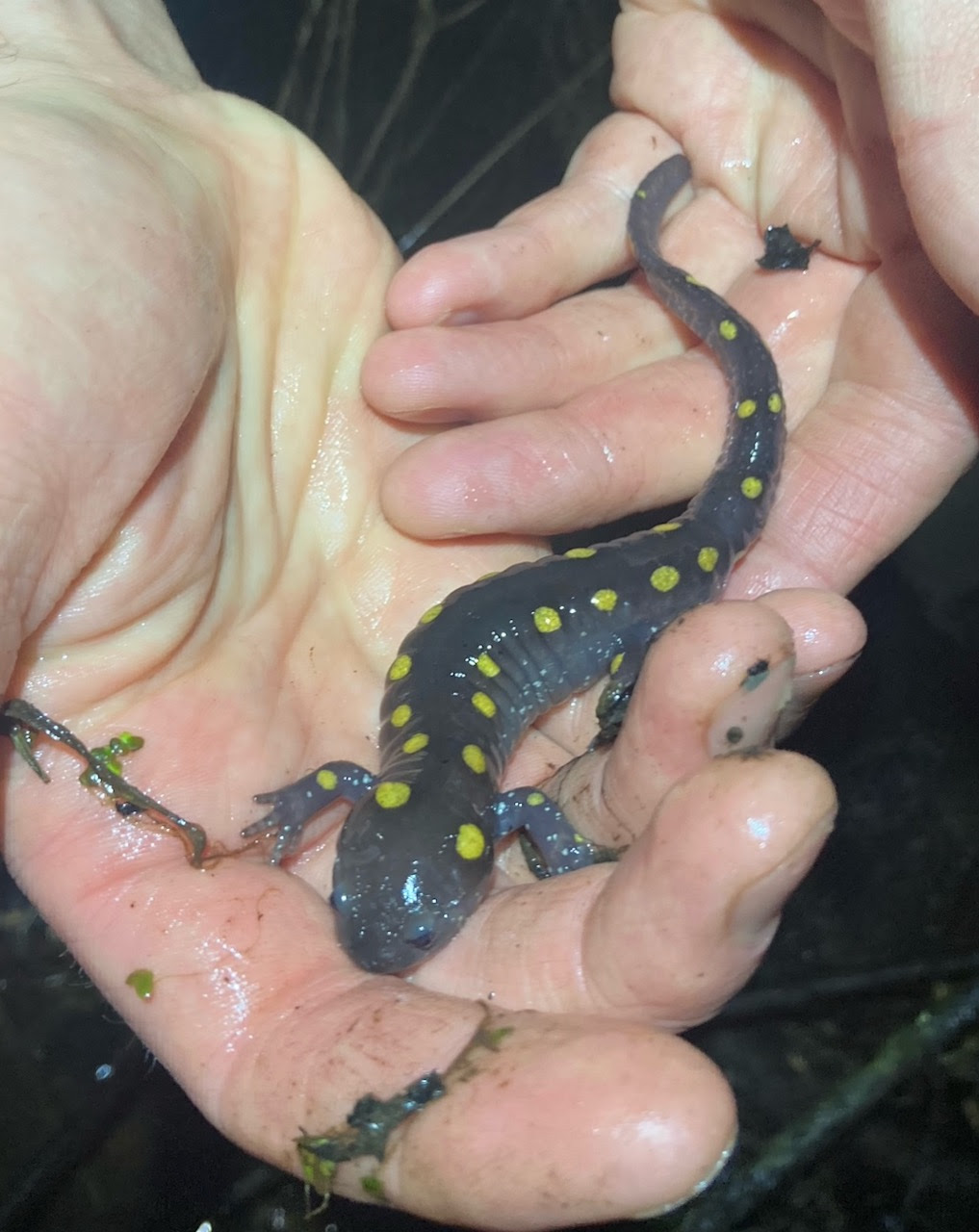
The photo of the Spotted Salamander above was taken by Anna Paritsky. She and Ira Powsner found it last night in Winooski. Spotted Salamanders are a common and widespread species in Vermont, but this is the first ever reported from the city of Winooski. Ira has been trying to fill in this data gap for four years. That leaves only three cities and one town, from which we still need documentation of Spotted Salamanders. They are Barre City, Essex Junction City, St Albans City, and the town of North Hero.
Since my last Herp Update, others have been filling in data gaps as well. Lily Cotell sent us the Wood Frog photo we needed from Townshend. We now have documentation of that species from all cities, towns, gores, and grants in Vermont! Long-time contributor Sarah Allen was the first of two people to document Spring Peepers in Middletown Springs. That leaves Avery’s Gore or St. Albans City as the only remaining towns from which Spring Peepers have never been reported. And we still need improved or updated reports from Andover, Barnet, Cavendish, and Glastenbury.
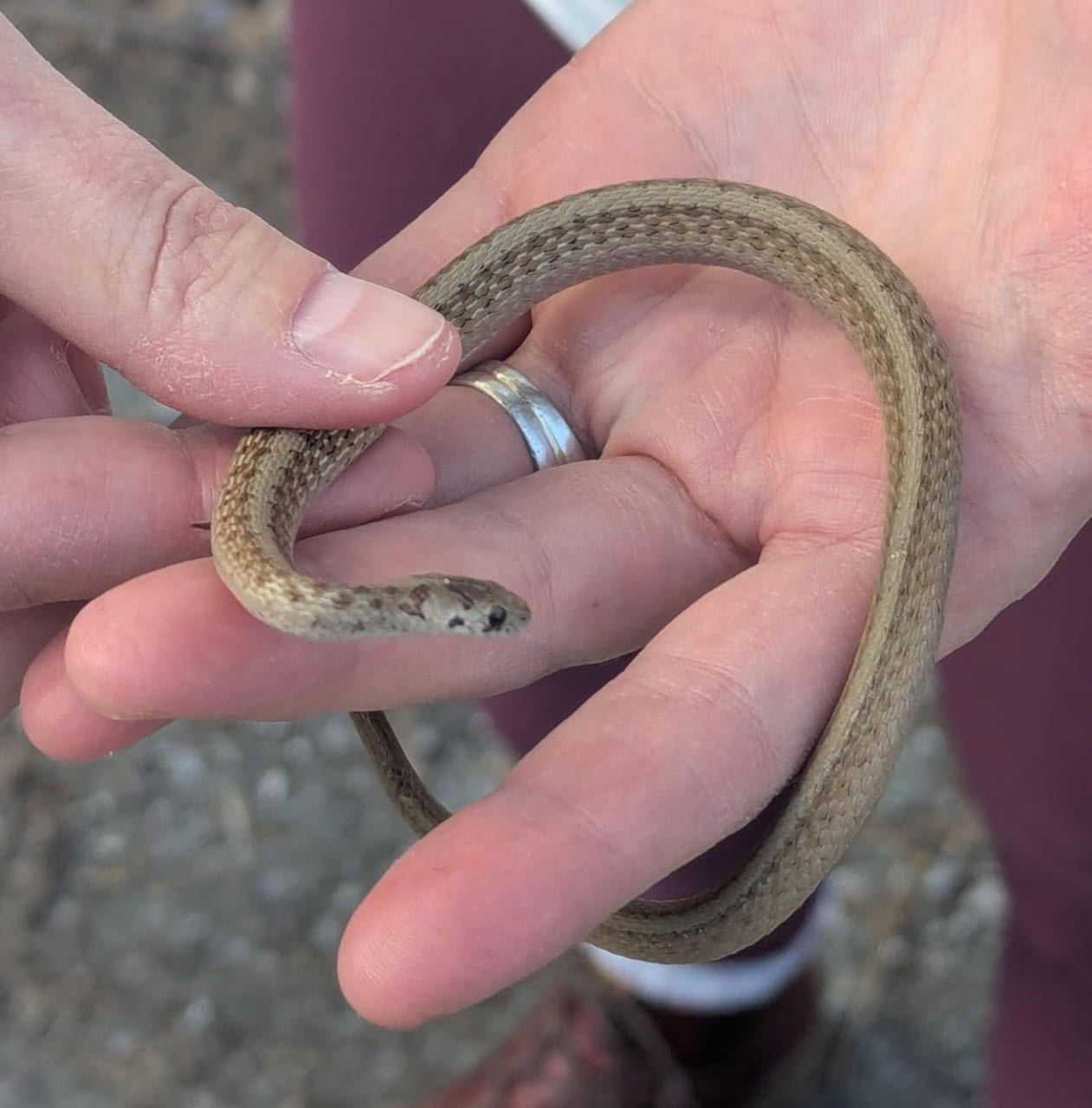
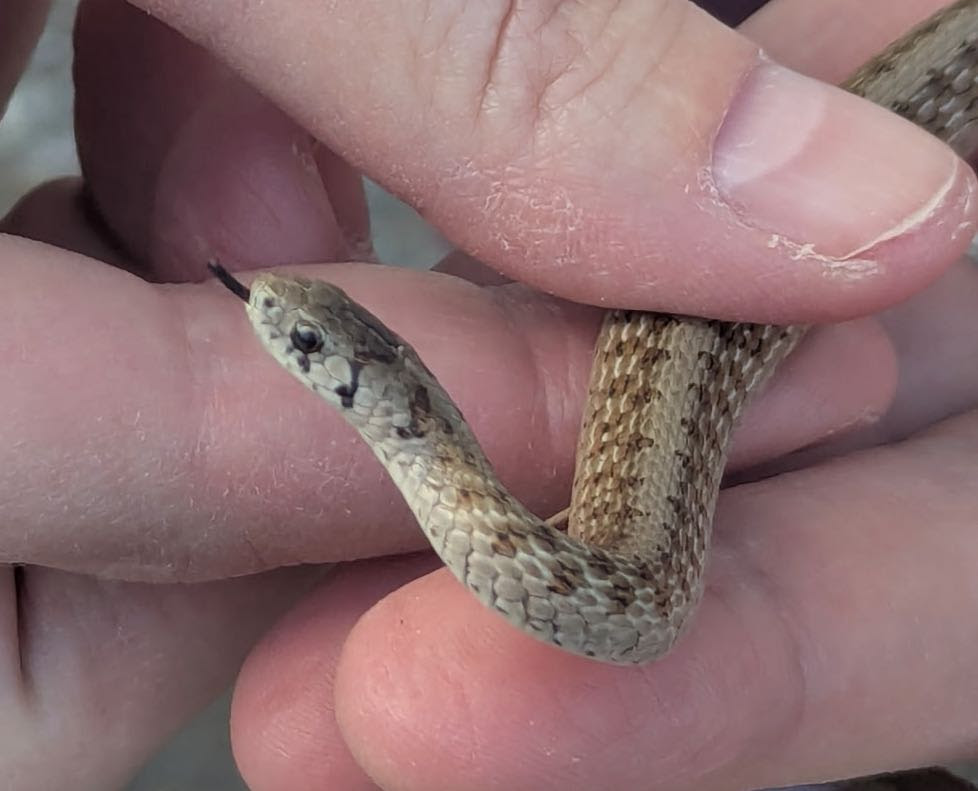
Maxwell King photographed the first Jefferson Group Salamander from Westford and Bree Gunter found and photographed the Dekay’s Brownsnake below just two days ago. It is the first ever reported from Middletown Springs. The lower photo shows the small black head markings that are typical of this species. One is under the eye, one behind the eye, and a third black mark is on the side of the neck. Red-bellied Snakes can be similar in size and color, but they have a bright red belly, and they don’t have these markings on the side of their head and neck.
Four-toed Salamanders
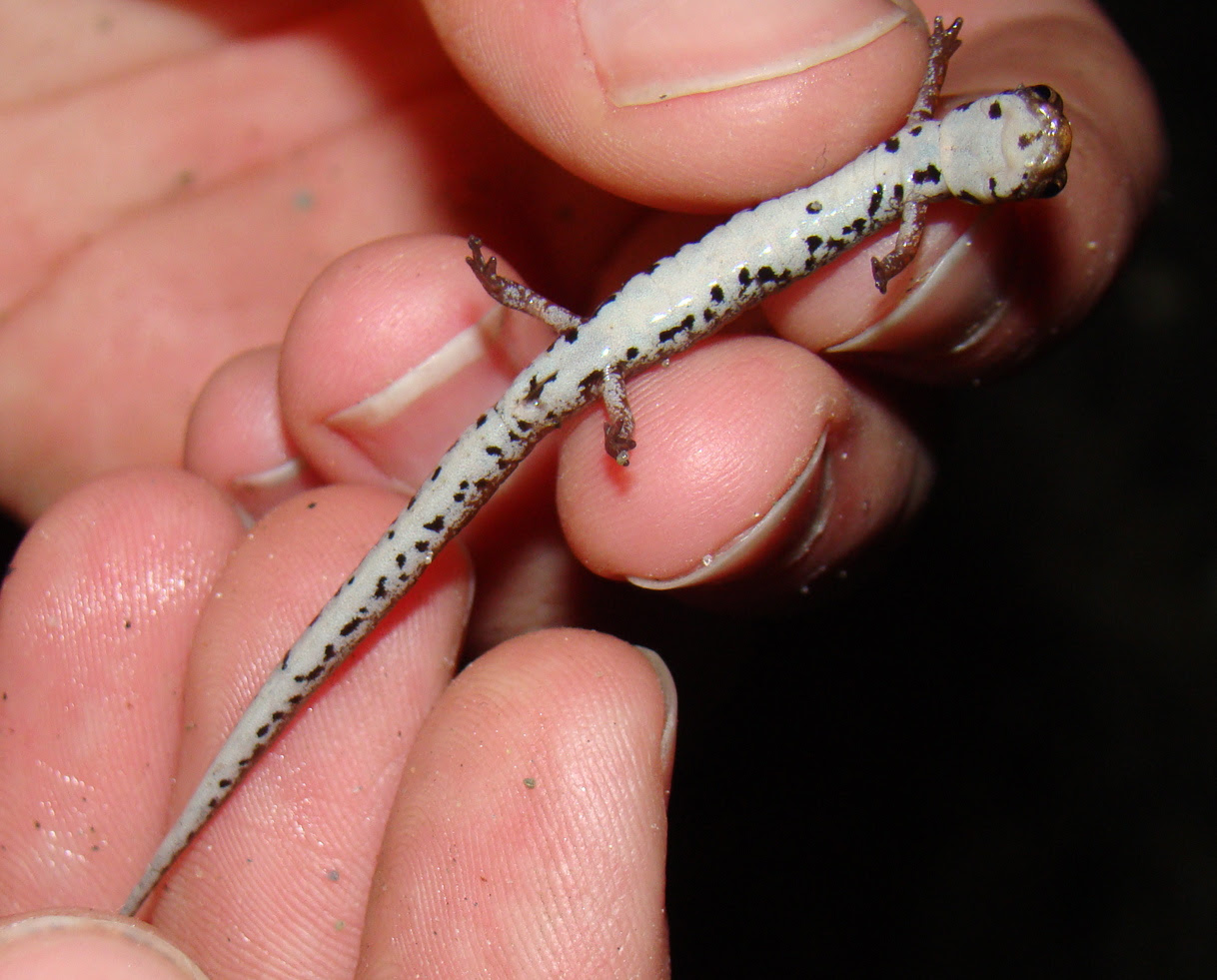
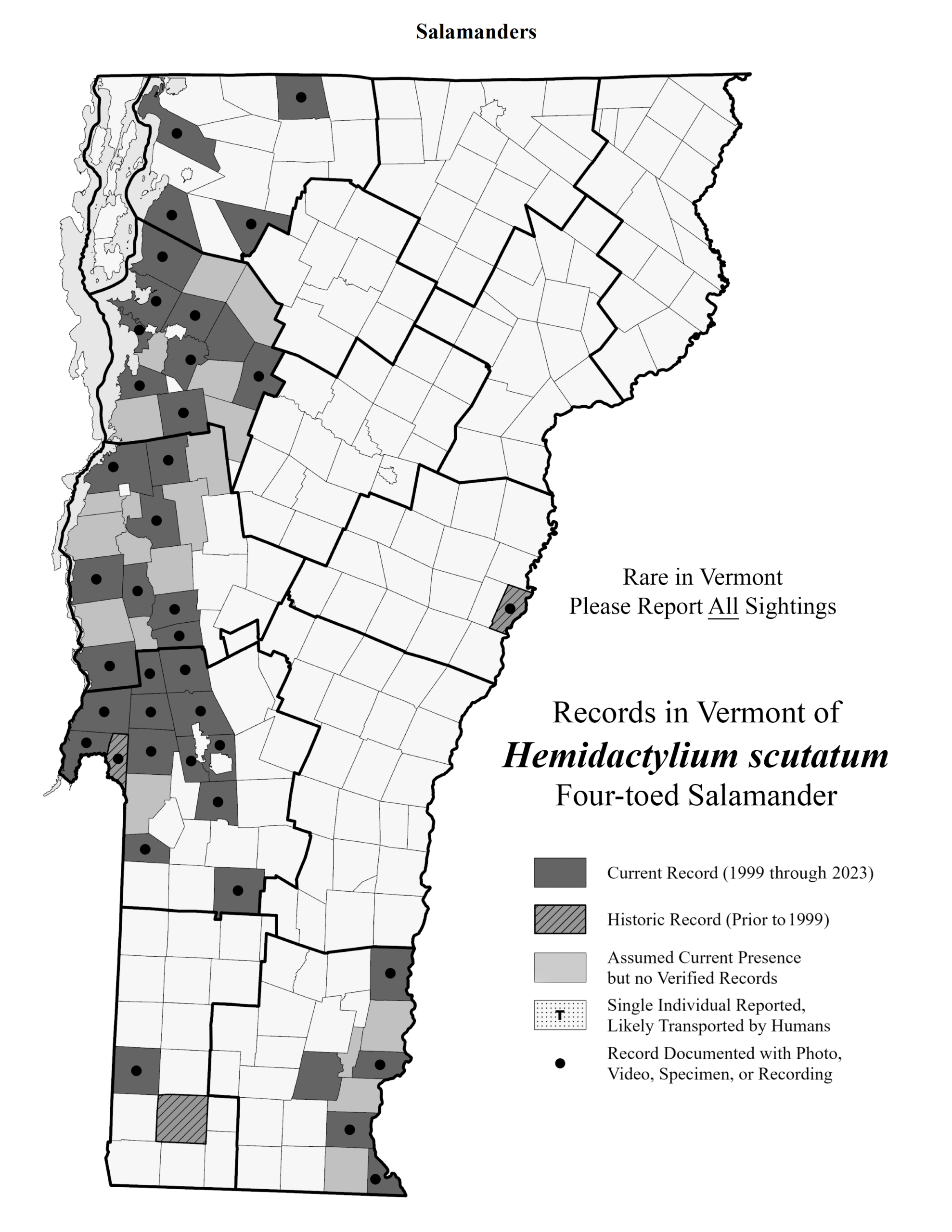
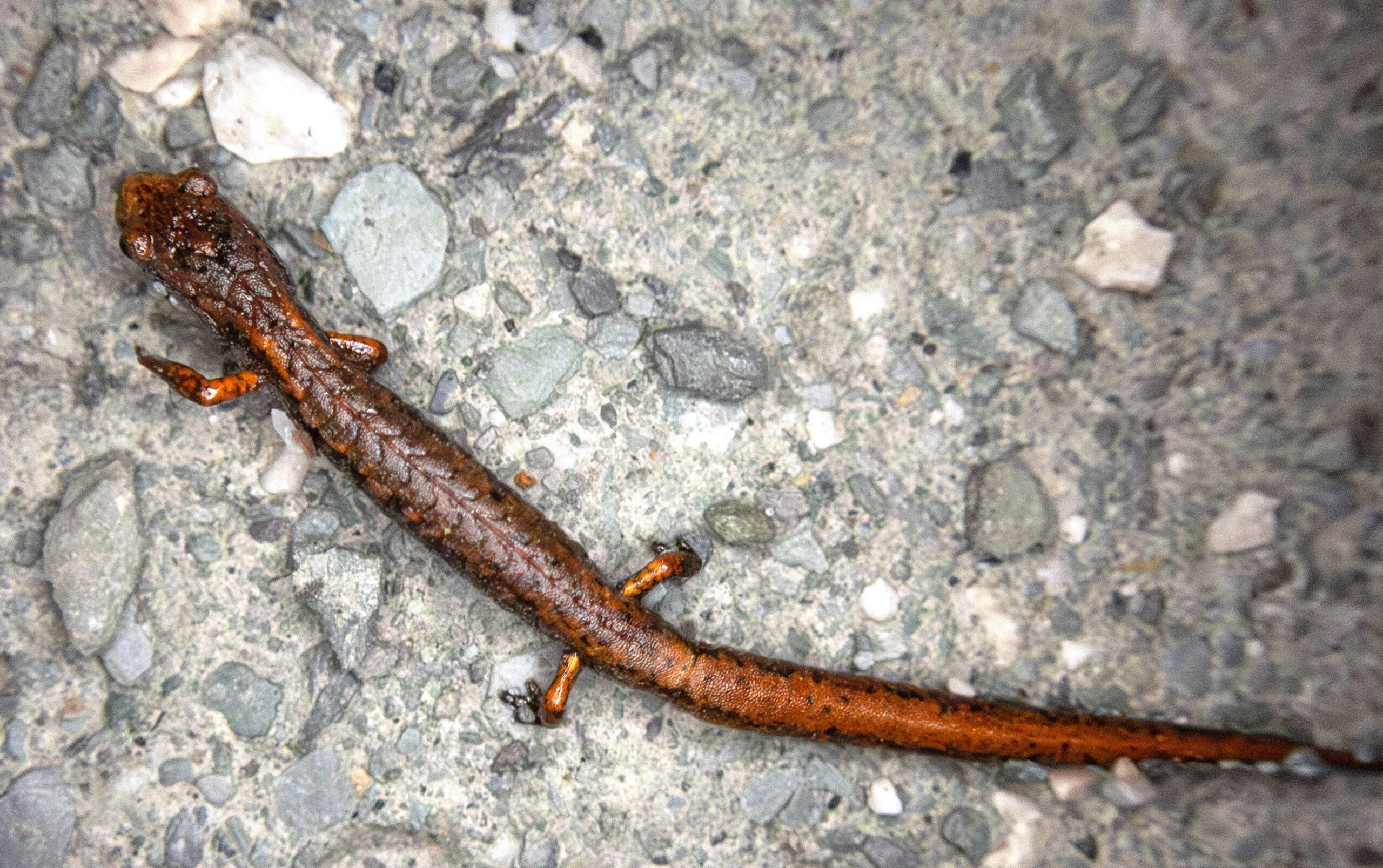
We have also received some first-ever town reports of Four-toed Salamanders in the past couple of weeks. Both Maxwell King and the team of Ira Powsner and Shannon Kane reported them from Westford on the same night. Four-toed Salamanders are another amphibian species that migrates to wetlands on warm and wet nights in the spring. But they are quite small, nondescript, and easily overlooked. They are often confused with Eastern Red-backed Salamanders since they are the same size and have the same body shape. One useful field mark is their behavior. Eastern Red-backed salamanders are quick and hard to catch. Four-toed Salamanders are slow and easily picked up. Once you pick them up, you should turn them over and look for the best field mark. It is their bright white belly, with scattered black spots, as shown in Shannon Kane’s photo below. If you have trouble turning the salamander over, it is probably an Eastern Red-backed. Other useful field marks of Four-toed Salamanders are the herringbone-like texture you can see on their brownish-orange backs. They are not perfectly smooth and shiny like a Red-backed Salamander. Four-toeds also have a constriction at the base of their tails that sometimes shows up very clearly. This is where their tail will break off if a predator (or you) picks them up by the tail. You can see their texture clearly in the middle photo below, taken by Samantha Spaulding. You can also see the constriction at the base of the tail of her salamander if you look closely. It is sometimes quite obvious on other individuals.
The bottom image shows that Four-toed Salamanders have primarily been found in the Lake Champlain Basin and the Connecticut River Valley, but even in those areas, we have many data gaps. If you are out on warm rainy nights during migration, or just turning cover, please keep your eye out for this species.