Herp Update: Amphibians on the Move, Reptile Reports

Amphibians on the Move in the Lake Champlain Basin
 With temperatures very close to 60 F, rain coming through at around 7 PM, and no snow left on the overwintering grounds, many amphibians moved downslope to their breeding habitat last night here in the lowlands of the Lake Champlain Basin. The number and diversity of species at the sites varied. So far, we have reports of migration from Pond Road in Shelburne, North Street in New Haven, Marrs Hollow and Duffy Roads in Milton, Watkins Road in Colchester, Brigham Hill Road in Essex Town, and Abnaki Road in North Hero. We have also received reports of more modest amphibian migrations from outside the Champlain Valley (Athens, Norwich, and Thetford).
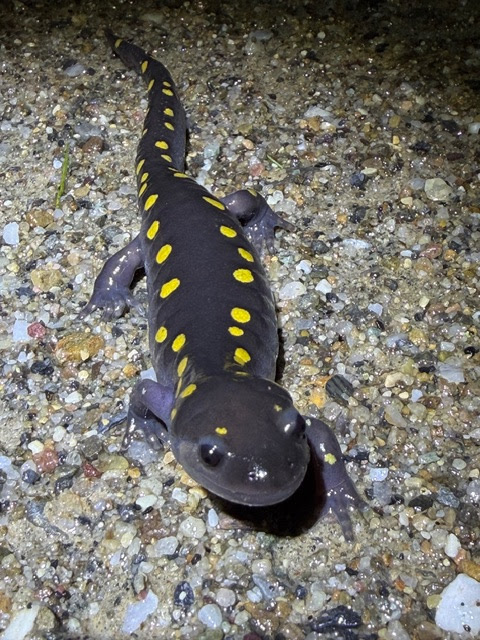
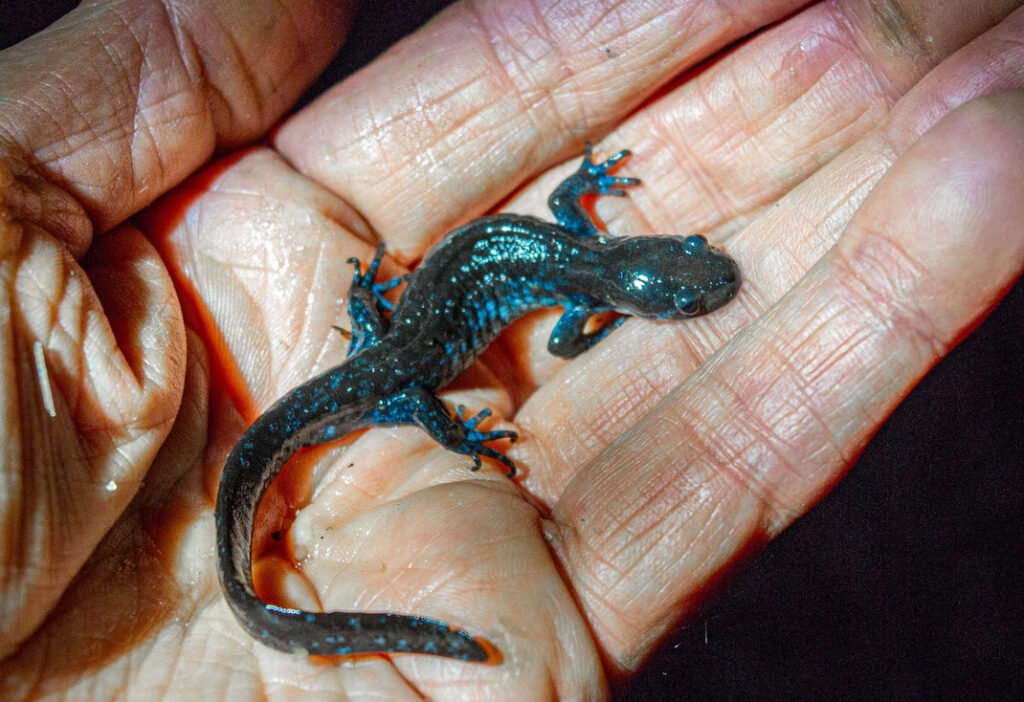
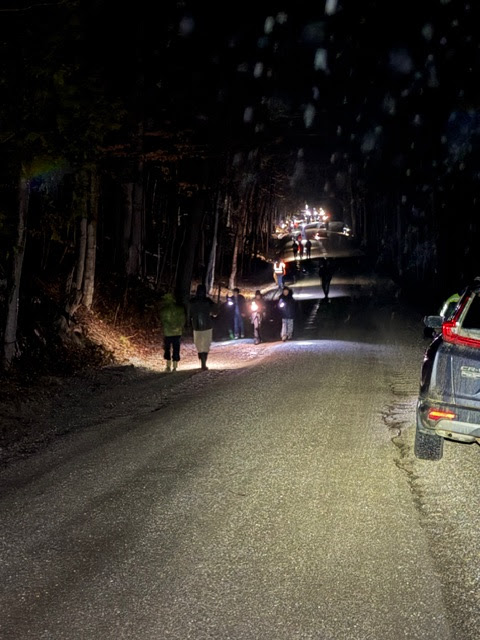
Given its low elevation and southeastern exposure, the Morgan Road crossing here in Salisbury is often one of the first sites to have amphibian migration in the spring. This spring, migration was first reported Wednesday evening, March 11 with reports coming from Monkton, Salisbury, and Shelburne. Last night (March 16), Otter Creek Audubon and the Salisbury Conservation Commission held our first public amphibian crossing event on Morgan Road. An amazing total of 114 enthusiastic volunteers showed up to gather data from 8:15 to 10:15 PM. During those two hours, they moved 1,022 amphibians of seven species. We helped a total of 564 Blue-spotted Salamanders, 185 Spotted Salamanders, 132 Wood Frogs, 56 Four-toed Salamanders, 52 Eastern Red-backed Salamanders, five Spring Peepers, and three Eastern Newts across the road. This was a major migration, but not a record number of any of the species involved, except the number of humans. Only six cars passed through the crossing area during our survey, but we tallied 25 dead amphibians as a result.
Keep in mind that the Eastern Red-backed Salamanders lay their eggs on land rather than in water, and that they don’t lay their eggs until later in the summer. Still, they often migrate from upland overwintering locations to moister lowland locations to feed. I expect that the Spring Peepers are just beginning to move, and amphibians such as Gray Treefrogs won’t show peak migration for months.
Looking at the current 10-day weather forecast, I don’t see ideal crossing conditions coming up again in the near future, but there are some evenings in the forecast showing a combination of rain/snow that might generate some limited migration. Migration at higher elevations, higher latitudes, and with northern exposures has not even begun.
The photo of the adult Blue-spotted Salamander above was taken by Chris Fastie. The Spotted Salamander and Morgan Road photos below were taken by Preston Turner.
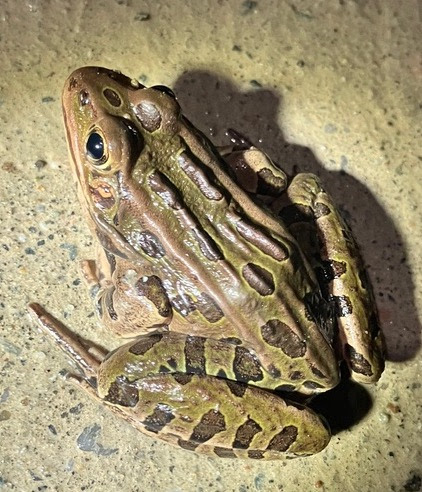
Alex Green took the photo of a Northern Leopard Frog below on Pond Road in Shelburne back on March 11. Northern Leopard Frog migrations are quite different from those of the other amphibian species mentioned above. They overwinter underwater and then migrate into shallow floodwaters to lay their eggs.
Reptile Reports
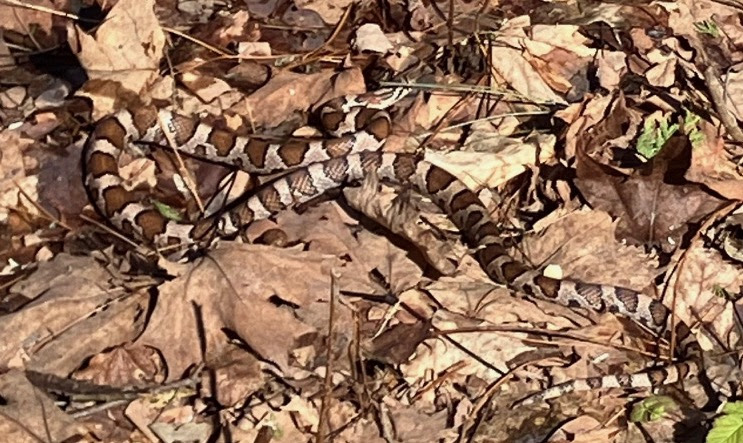
We also received some reptile reports over the past two weeks. Geralyn Carpenter’s report and photo (below) of an Eastern Milksnake on March 8 is remarkably early for that heat-loving species. I suspect it was within a few yards of its overwintering location.
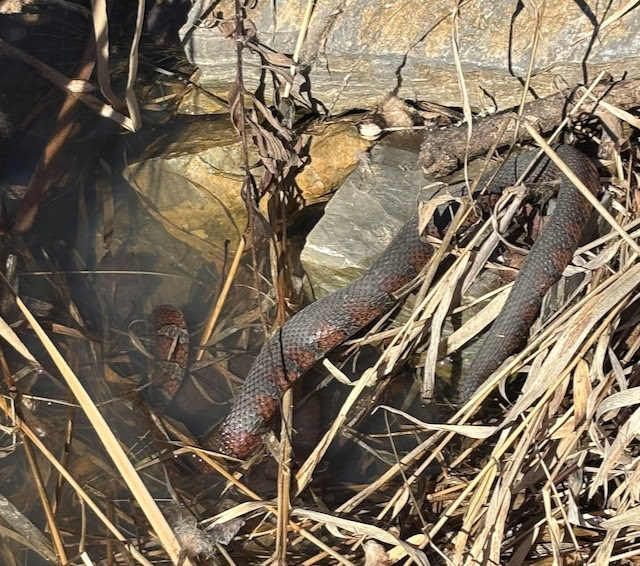
Eliza Merrylees sent us the photo below. It is one of two very early-rising Common Watersnakes she sighted in Leicester back on March 10.
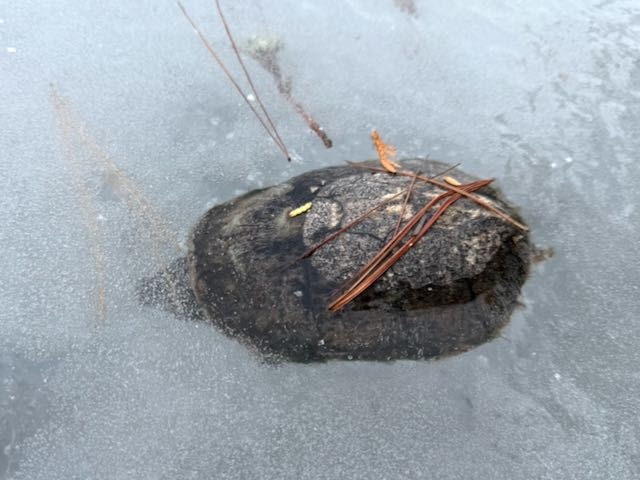
Emily Potter sent us this photo of an Eastern Musk Turtle frozen into the ice on Lake Bomoseen. She chipped it out and thawed it, but it probably died long ago. How it got on top of the ice is a mystery. It may have been caught by an ice fisherman or perhaps brought up by an Otter. Lake Bomoseen is one of only a small handful of lakes in Vermont that have populations of the species. The other lakes with this species are Sunrise, Sunset, Hortonia, and Lake Champlain.