Herp Update: Snakes Moving & Snapping Turtles Emerging

Current Activity
Snakes on the Move
After the first cold nights of the late summer and early fall, snakes start moving back to their denning areas. Over the last month, we have received reports of all of Vermont’s snake species moving back to their dens except the North American Racer and Eastern Ribbonsnake. (We did receive reports of Eastern Ribbonsnakes earlier this year, but we have not received a documented report of a North American Racer since May of 2024).
Sadly for the snakes, many of them need to cross roads to get to their overwintering spots. On sunny fall days, open roads are often warm, and the migrating snakes often linger on the road surface to soak up some heat. When my daughters were young, I took them to check a nearby snake crossing area on the first sunny day after our first fall frost. In about an hour of walking a short 100-yard section of dirt road at the south end of Snake Mountain in Bridport, we found as many as 36 Dekay’s Brownsnakes, along with Red-bellied Snakes, Common Gartersnakes, Eastern Milksnakes, and even an occasional Smooth Greensnake. This dirt road separated a wet, unmowed field from a rocky, wooded hillside in the Lake Champlain Basin, so it was an ideal crossing area for Dekay’s Brownsnakes. Sadly, some of the snakes had been run over, but most of them were alive, and we moved them to the uphill side of the road. As sad as it is to see dead snakes, they still provide useful distribution information and are worth photographing and reporting.
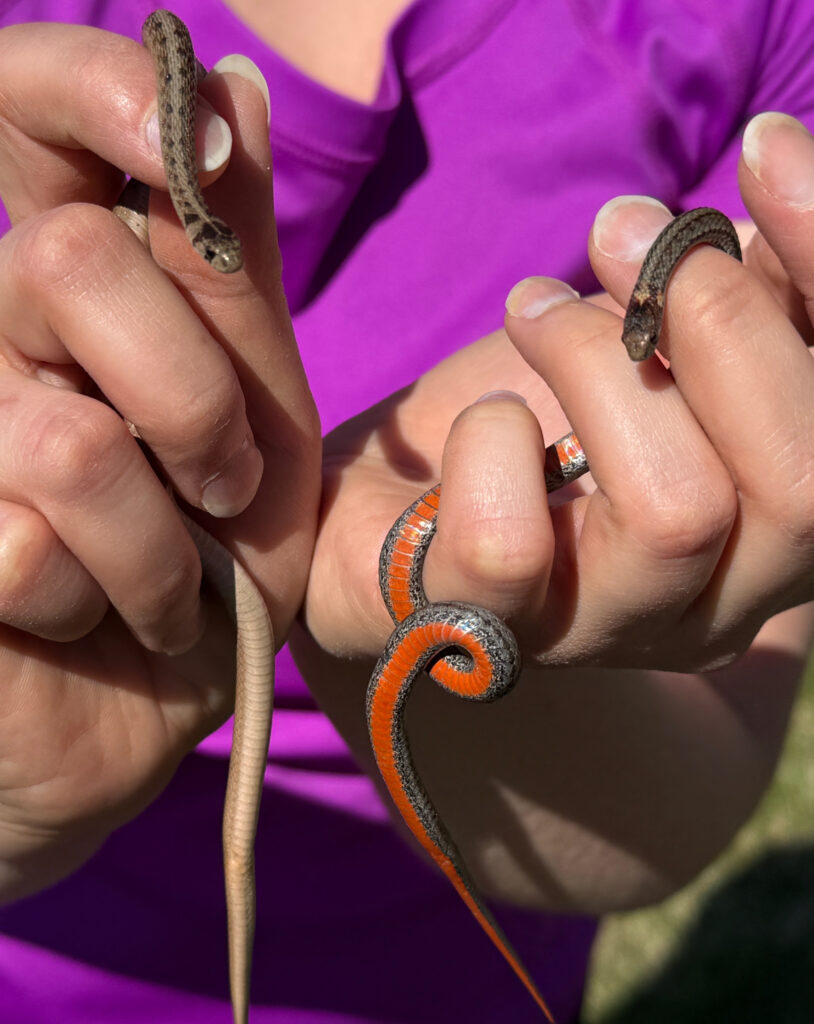
The photo below shows a Dekay’s Brownsnake on the left and a Red-bellied Snake on the right. They were found on a road in Fletcher by Shannon and Penny Kane. The color of the underside (venter) is a very useful field mark for distinguishing these two closely related species. Also, their head and neck patterns are quite different. Notice the light diamond mark on the back of the head of the Red-bellied Snake and the dark “sideburns” on the Dekay’s. Although this Red-bellied is dark gray, some are black, and most are the same color as the Dekay’s Brownsnake on the left.
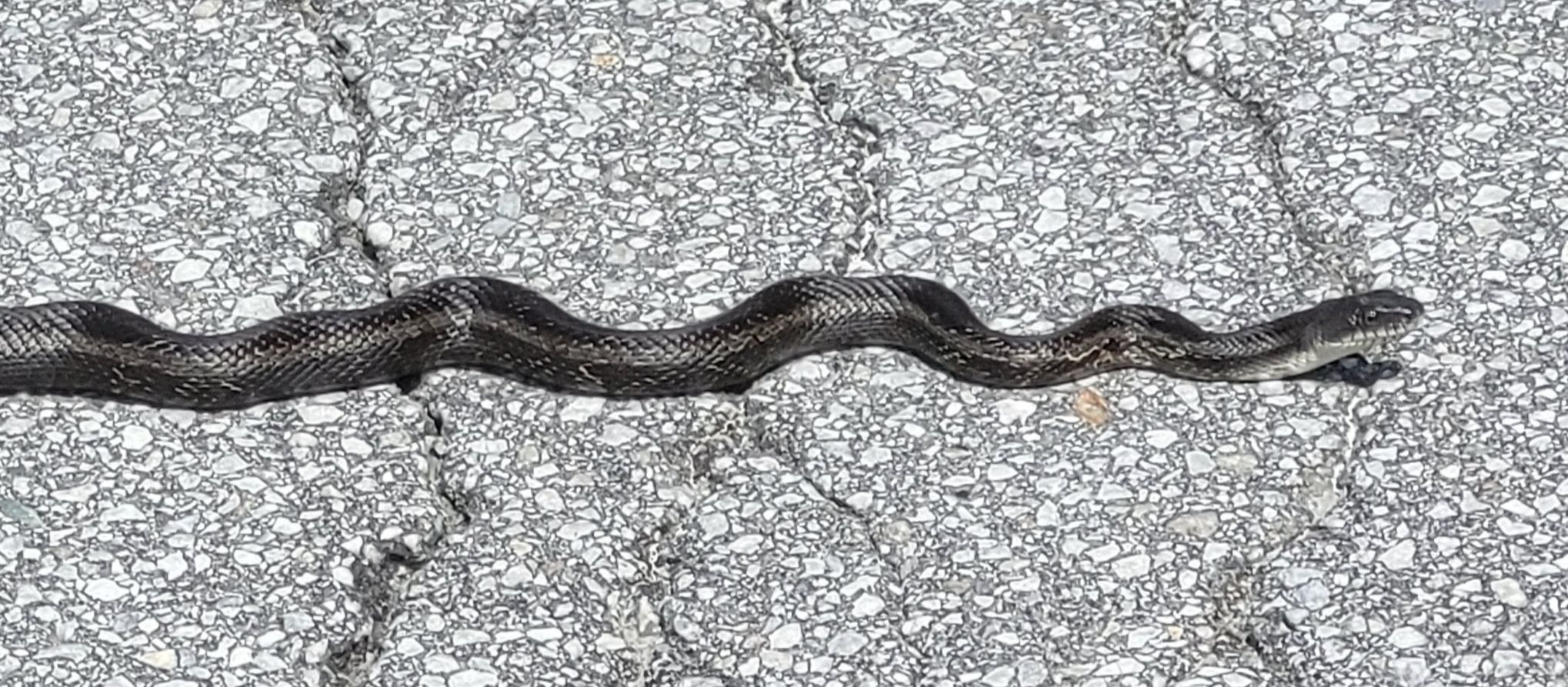
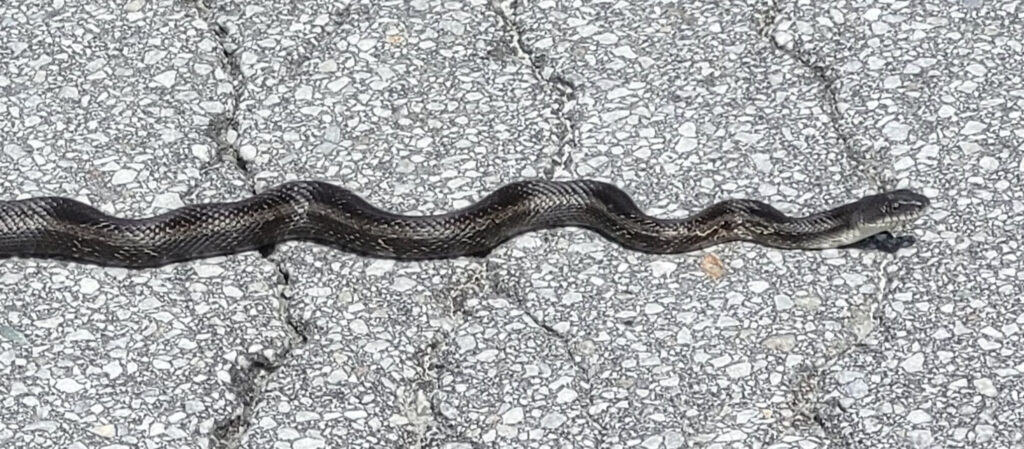
The Central Ratsnake below was photographed on Route 144 in Benson by Cynthia Brown, and the Eastern Milksnake shown below it was moved out of the road in Middlebury and photographed by Dottie Nelson.

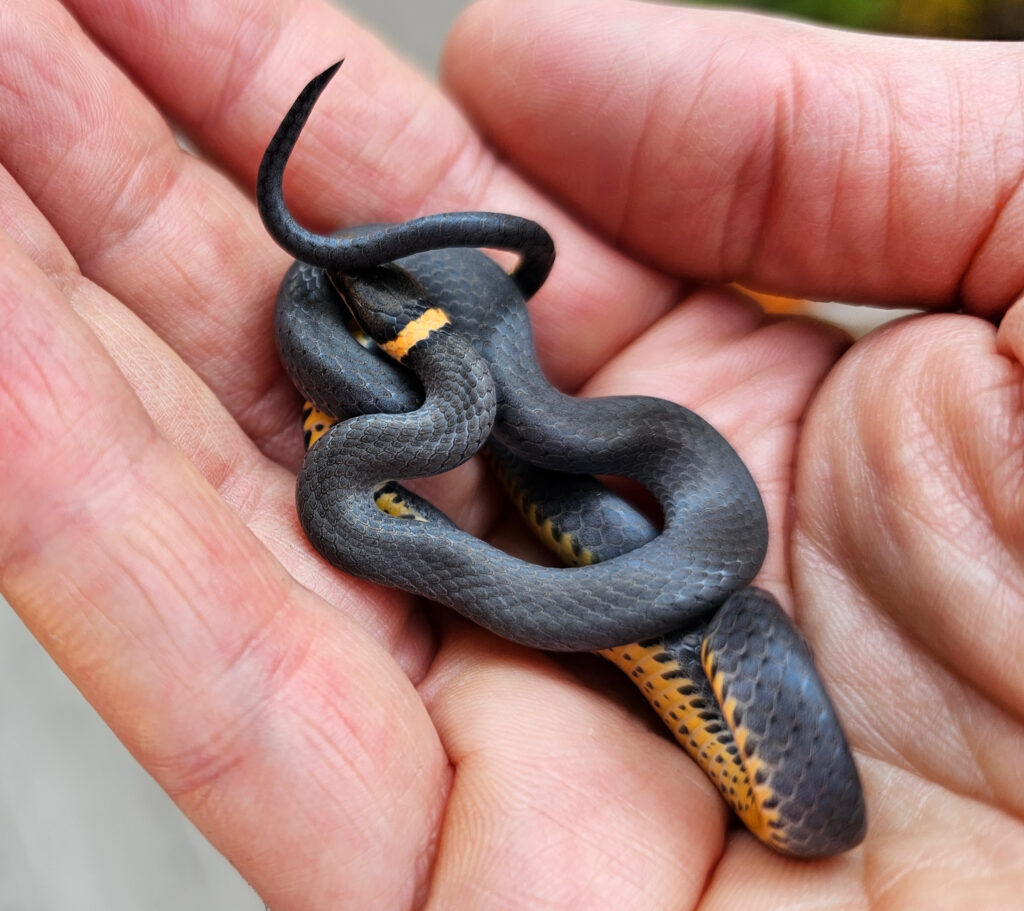
David Traver Adolphus photographed the Ring-necked Snake below that he found on a road in Sunderland. Below that is a Timber Rattlesnake that Mike Nobles photographed basking on a road in West Haven.

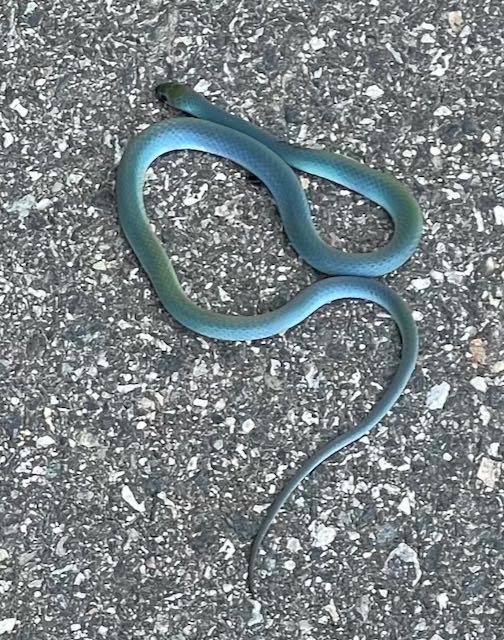
Emilie Sauvayre took the photograph below. It shows a dead Smooth Greensnake that she found on a road in Reading. Greensnakes lose their yellow pigment gradually after death. As a result, they change from green to blue, like the one in her photo.
All these snakes were found on roads. I hope I can convince you to take a walk or bike ride on a nearby quiet road on the next sunny day after a cold and frosty night. If you do, please take your camera along and send us photos of any snake you find. We are missing reports of common snake species from many towns. We need updated reports of even Common Gartersnakes from Canaan, Irasburg, Kirby, Lemington, and Topsham. Red-bellied Snakes should be found in every town in Vermont, but they have never been reported from 30 Vermont towns, and we need updated reports or photos from another 23 Vermont towns.
Snapping Turtles are now Leaving their Nests
Most Painted Turtles and some Northern Map Turtles hatch in the fall, but stay in their underground nests until the following spring. In contrast, all of our other turtle species are digging out of their nests now and heading for the nearest water. Looking at all the reports of hatchling North American Snapping Turtles in our database, I see that they have been reported emerging from nests as early as August 29, and as late as November 4. We are now in the middle of our emergence period for most turtle species.
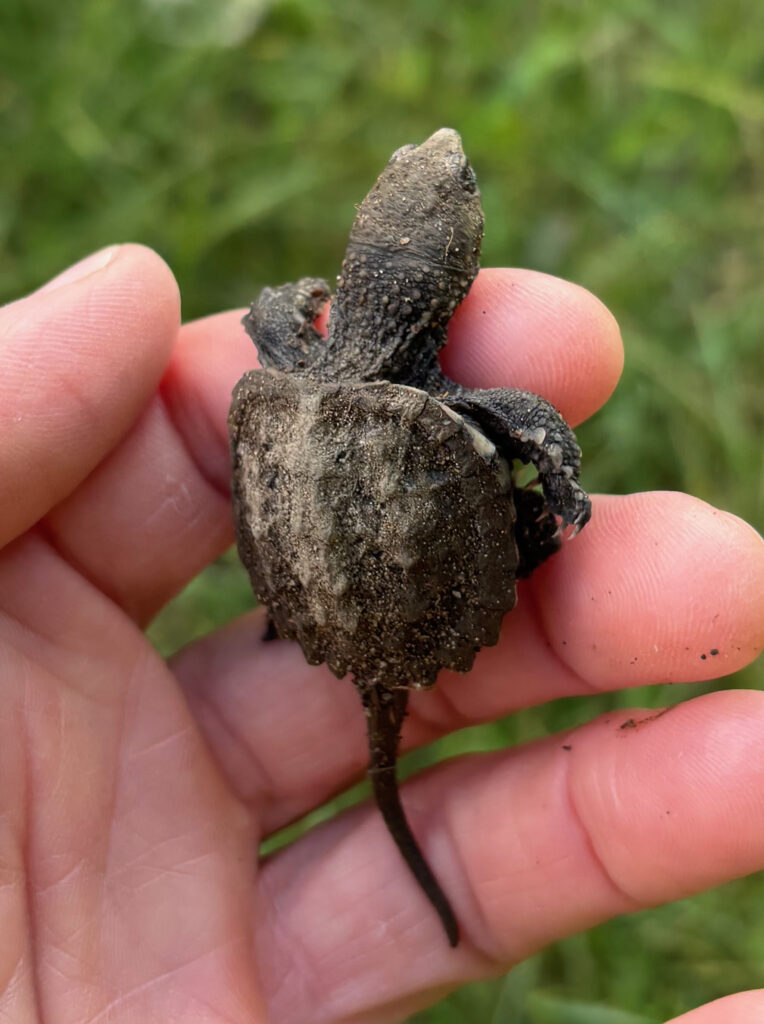
The Snapping Turtle hatchling below was photographed in St. Albans Town on September 6 of this year by Chris Bachand. Female Painted and Snapping Turtles may travel over a mile to a favored nesting spot, but our other turtle species don’t travel as far from water. As a result, Snapping and Painted Turtles are the two species that most often show up on roadsides, yards, gardens, and driveways. The hatchlings are hard to recognize on the road surface unless you look carefully.