Herp Update: Interesting Herp Reports, Metamorphosing Frogs, Survey Work – August 6, 2025

Recent Herp Activity
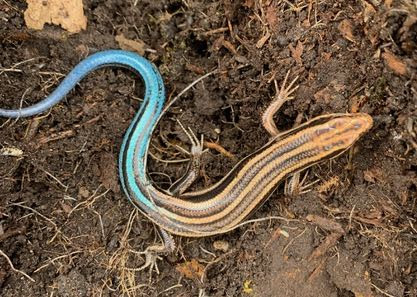
We have received some very interesting reports over the last month. A woman in Benson contacted us to report the Common Five-lined Skinks she has on her property. Common Five-lined Skinks are Vermont’s only native lizard, and all known populations are within two miles of Lake Champlain in West Haven and Benson. Her house is within that range, though we were unaware of her skinks. She sent the photo below. The bright blue tail tells us this is still a youngster.
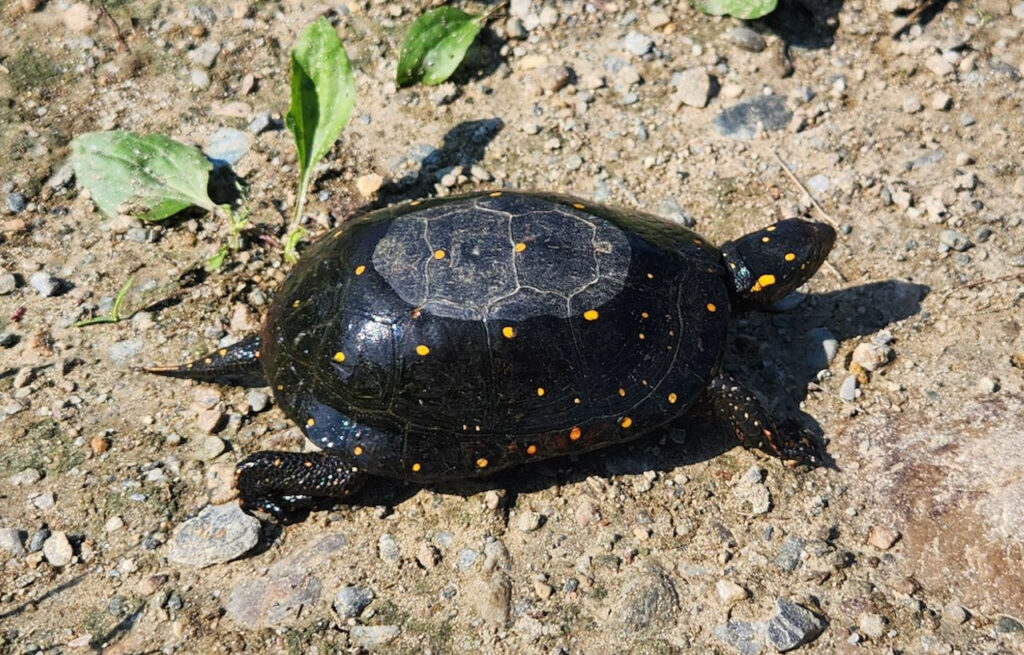
We had a report of a Spotted Turtle from a previously unknown location. It is within a couple miles of a known population, but it is using a different water body. This is the first new location found for this species in decades. The dark portion of the carapace in the photo was recently wet.
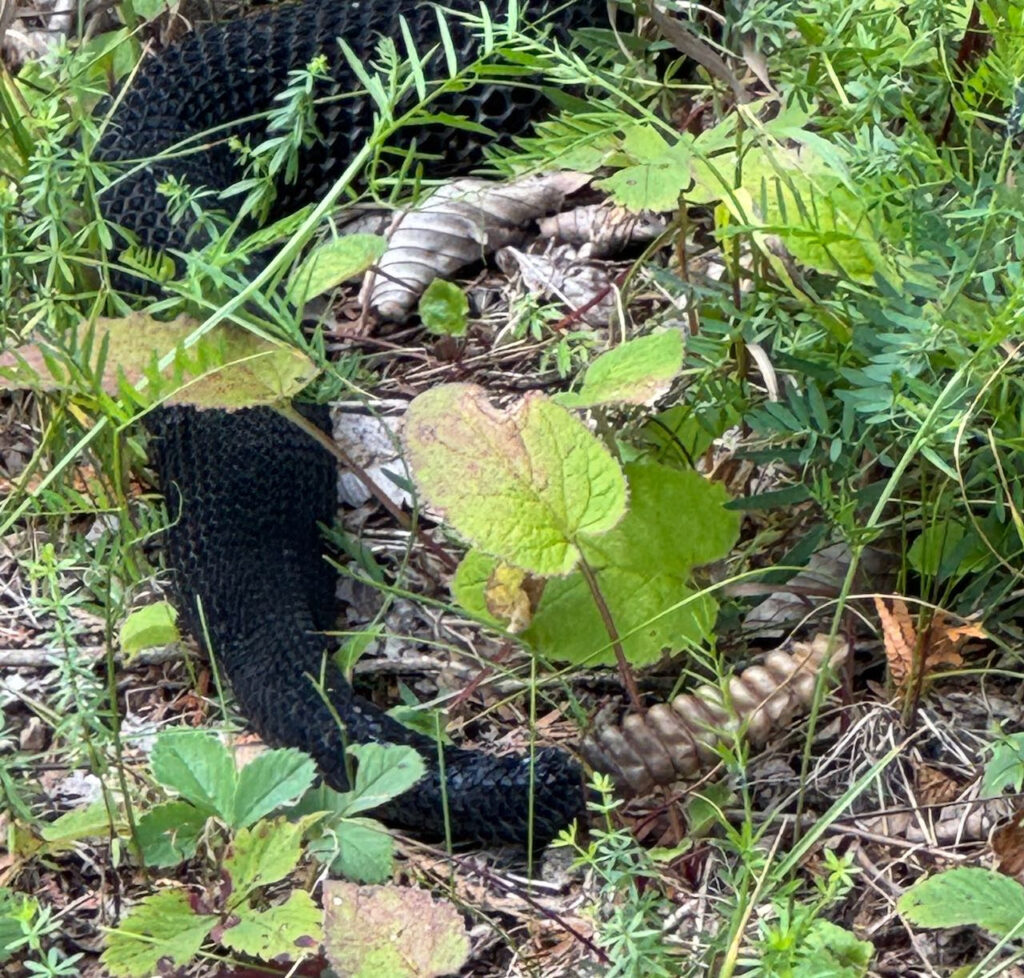
The Timber Rattlesnake below showed up in Grand Isle County! There are no known populations of rattlesnakes in either NY or VT within 30 miles of the location where it was found. Nor is there any appropriate habitat. Most likely, this critter hitched a ride either in a boat, truck, load of lumber, or some other form of human transport. The local wardens captured this snake. It is currently in the custody of Vermont Fish and Wildlife, and it is unclear where it will end up. Almost all out-of-range Timber Rattlesnake reports end up being Eastern Milksnakes, since milksnakes can rattle. However, the black tail and segmented rattle shown below, leave no doubt about this snake being a Timber Rattlesnake.
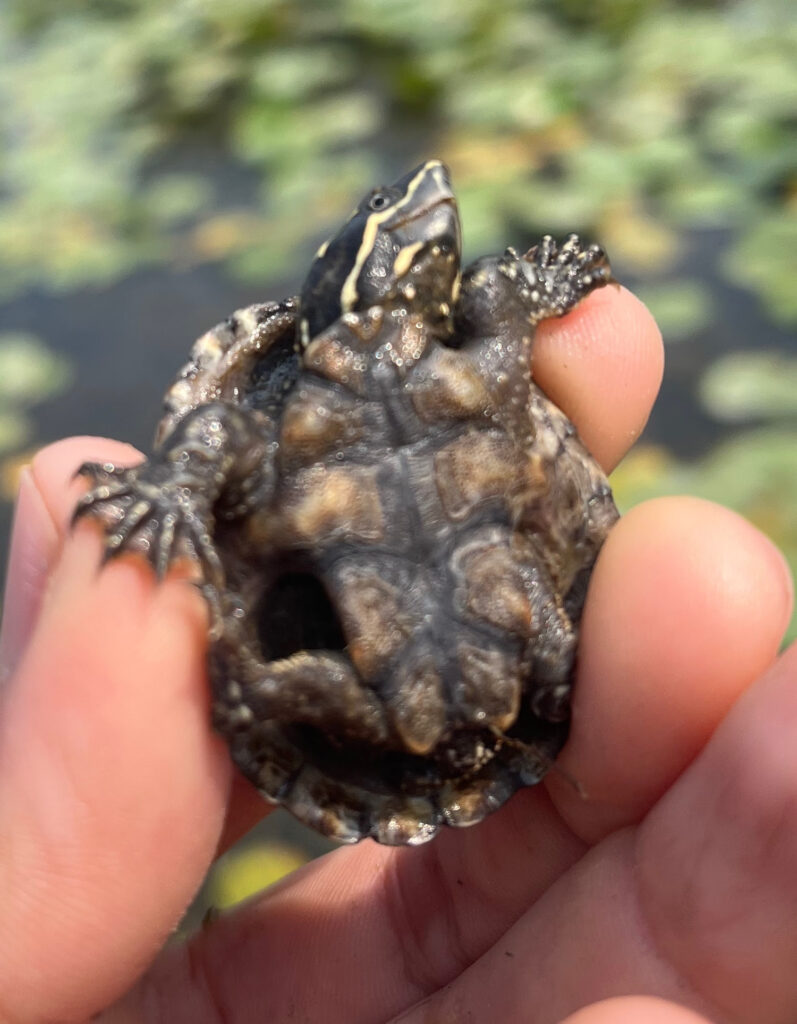
Anila Kalonia accidentally netted the young Eastern Musk Turtle shown below while dip netting for invasive species in Lake Champlain in Orwell. Eastern Musk Turtles are only known from the shallow bays of Lake Champlain, as well as a few lakes in the Poultney River drainage.
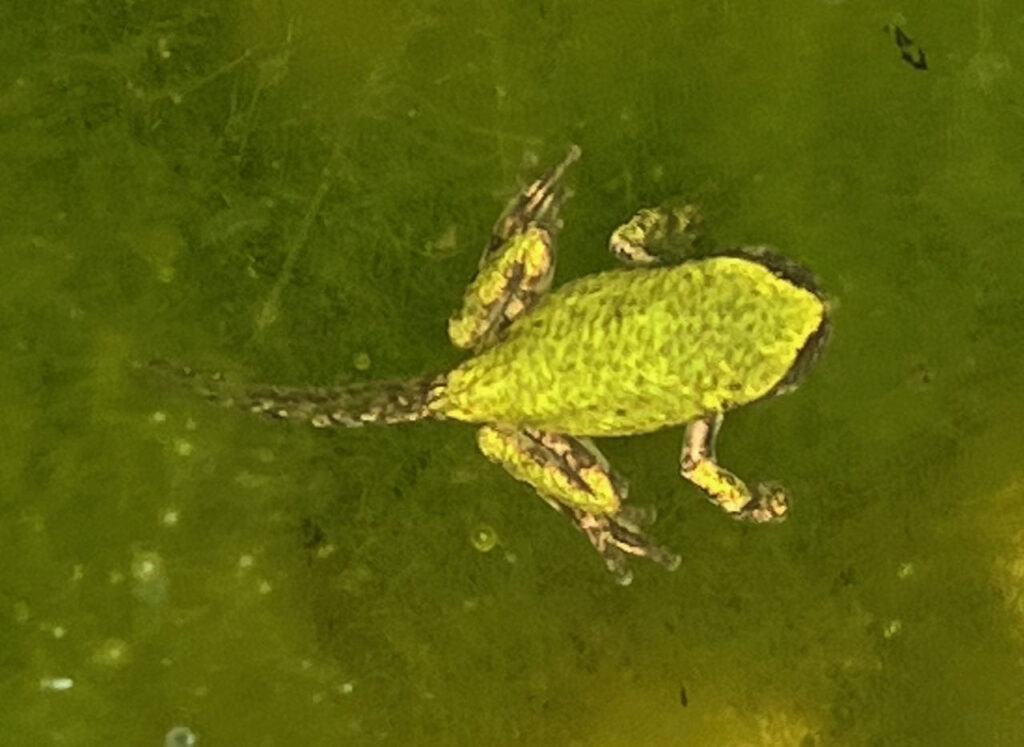
Many of the frog eggs that were laid this spring and early summer have now completed their development. The tadpoles have metamorphosed and are now on land. My wife, Kris, took the photo of the transforming Gray Treefrog below in Cornwall earlier this week. Notice that it has not yet resorbed its tail. Young Gray Treefrogs are a solid emerald green. They develop their other colors and pattern as they age.
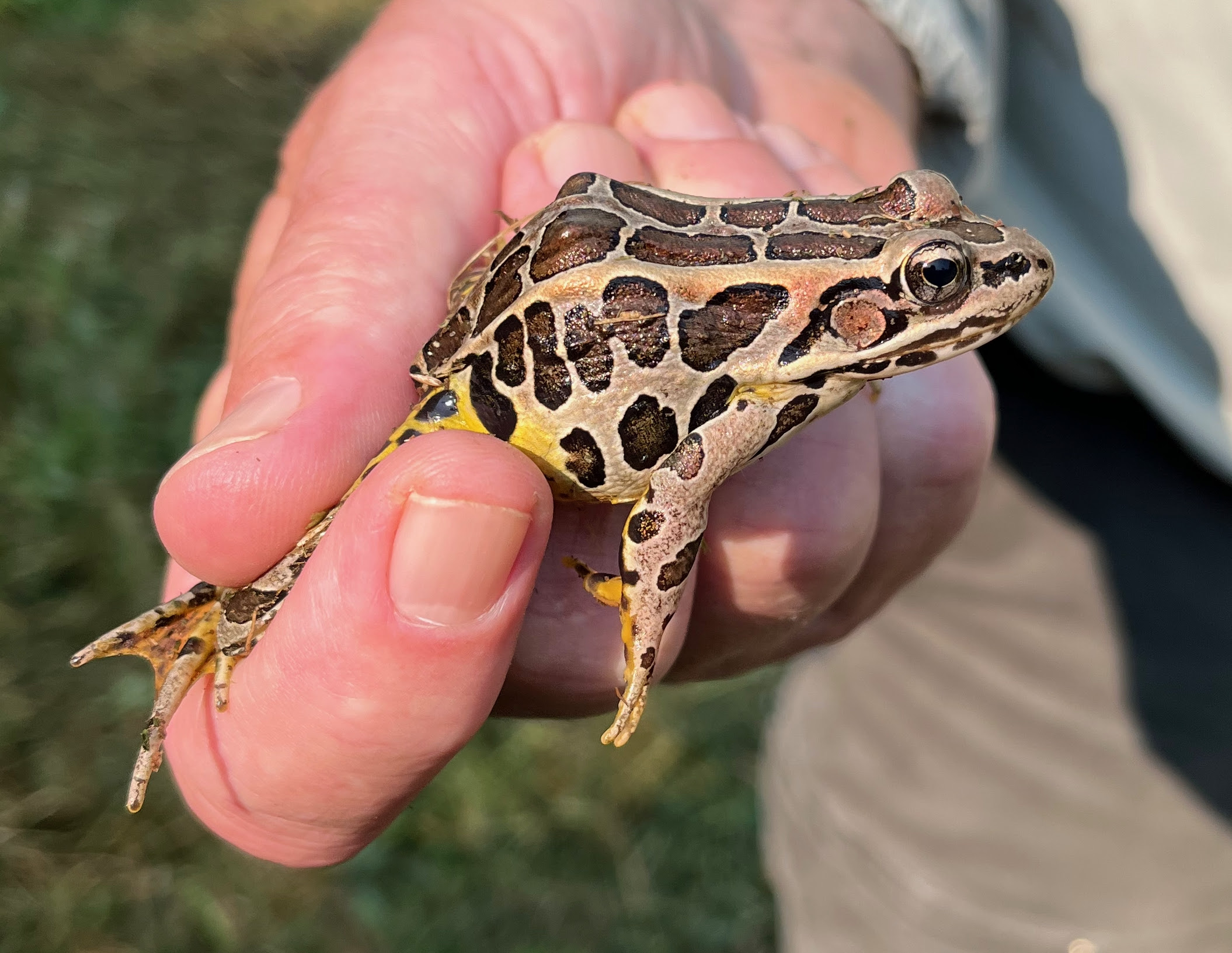
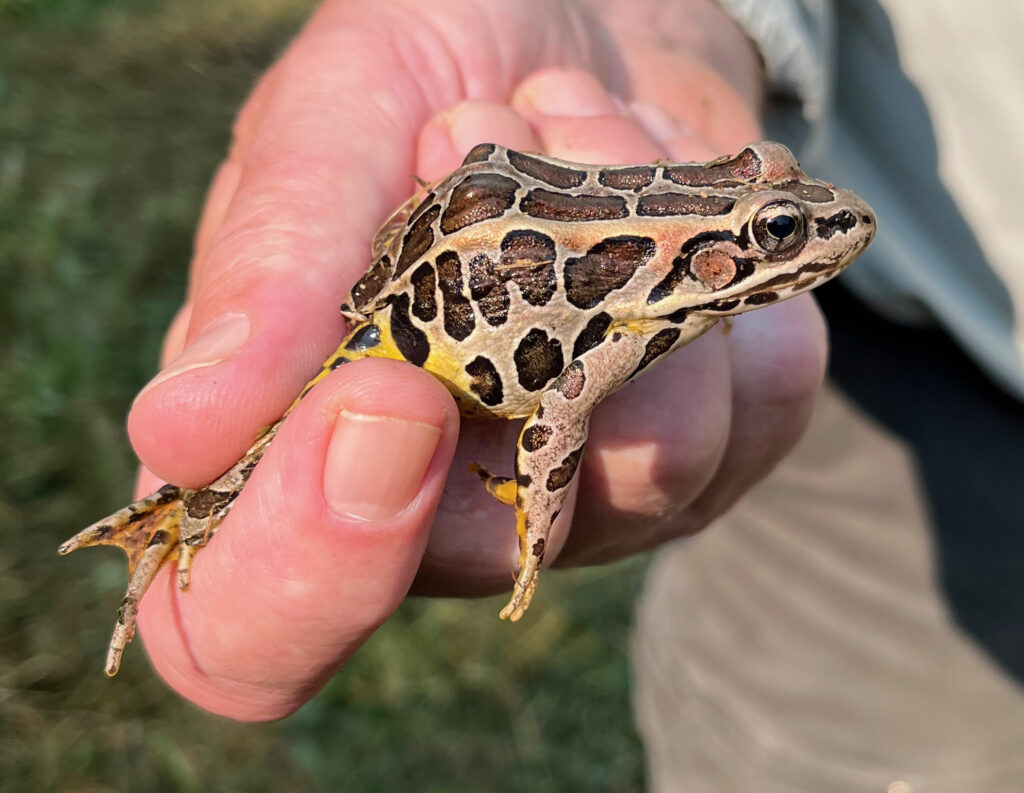
This last week, we also found a large group of recently metamorphosed N. A. Bullfrogs in Starksboro. They developed from eggs that were probably laid two years ago, possibly three. My sister reported that they were still tadpoles just two weeks ago. At the same site, we found a recently metamorphosed Pickerel Frog. That youngster escaped before we could get a photo of it, but my wife Kris snapped this photo of a beautiful adult in a nearby field.
Recent Survey Work
Kate Kelly and I visited Jay and Troy in mid-July and documented eight species in Jay and five in Troy to fill some data gaps. Yesterday we again failed to document Spring Salamanders in Proctor, but we did manage to update reports for Northern Dusky, Northern Two-lined, and Eastern Red-backed Salamanders. I now believe that Spring Salamanders are genuinely missing from Proctor due to a lack of cold, spring-fed, permanent, mountain streams. The stream we visited only had occasional small pools of water remaining. Much of the stream had dried up completely or gone underground. Spring Salamanders spend multiple (3-5) years in their larval aquatic stage, so they cannot survive in streams that dry up with any regularity.


