Herp Update: Gray Treefrogs, Nesting Turtles, Bullfrogs

Current Activity
Gray Treefrogs
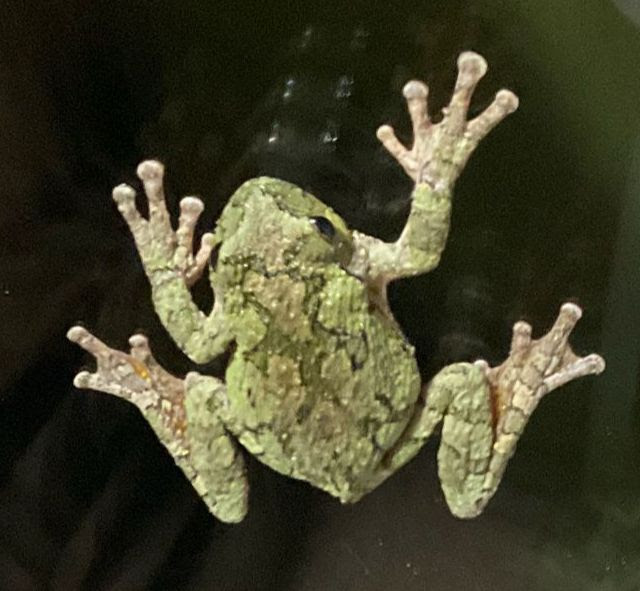
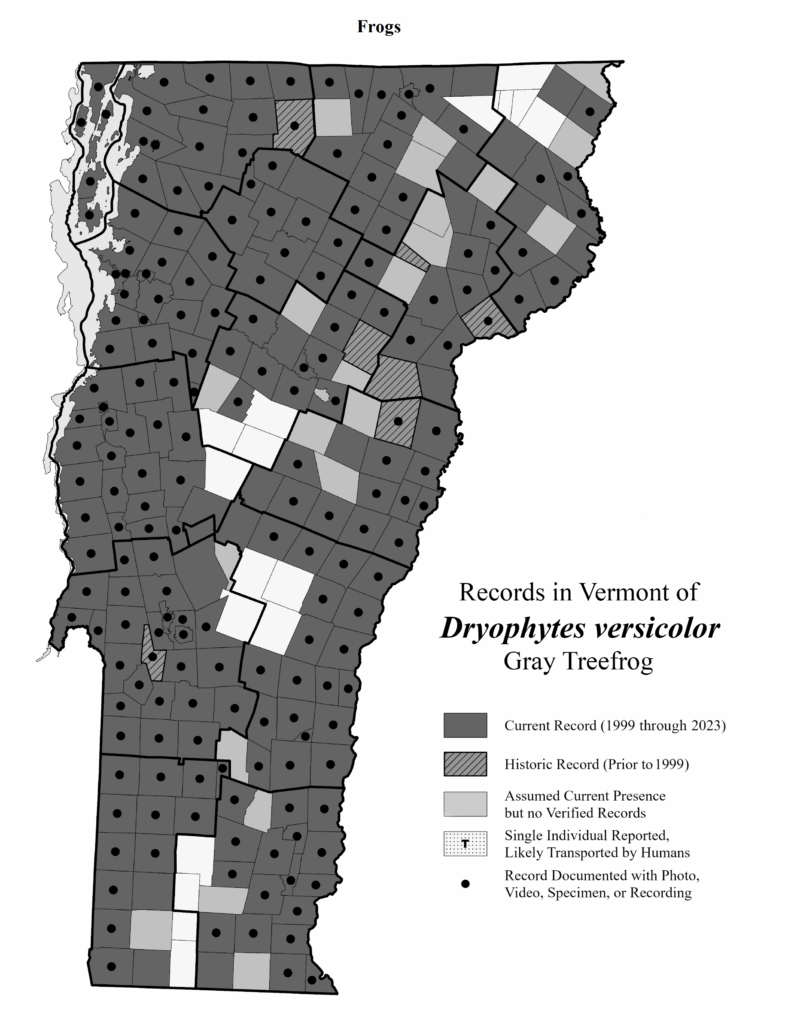
Gray Treefrogs have been very active lately. We have received over 60 reports of them calling from the outside walls of houses, decks, grills, and outside furniture since our last Herp Update. The photo below was taken by Theo Gewissler in Marshfield. Previous to her report, we had not received a Gray Treefrog report from Marshfield since 1995! We are still missing reports of them from many mountain and northeastern towns in Vermont. Please do listen for their distinctive call. We need either updated or first-time reports from all of the towns that are shown in white, gray, or crosshatching in the map below.

Nesting Turtles
This is the season for female turtles to leave their ponds and streams and travel overland in search of open, sunny, well-drained, and easy-digging locations where they will dig their nests and lay their eggs. Sadly, they often choose road margins as a nesting location. We have received almost 100 reports of turtles on land since our last update. Thirty-seven of the reports were Painted Turtles, 33 were North American Snapping Turtles, five were Northern Map Turtles, and one was an Eastern Musk Turtle. In addition, Vermont Fish and Wildlife biologist Molly Parren also reports that Spiny Softshells have been nesting on the Lake Champlain beaches that she helps to monitor. We have also received reports of 15 Wood Turtles on land. Some of these were definitely nesting, but since Wood Turtles travel widely and feed on land, we don’t know for sure that they were nesting, unless they were reported digging or filling holes.
The top photo below shows a nesting Wood Turtle found and photographed by Mike Herbst. Below that is a photo of a nesting Snapping Turtle taken by V. Marans in Arlington. The bottom photo, taken by Cynthia Bullis Nguyen, shows a Northern Map Turtle nesting in Grand Isle.


North American Bullfrogs
The photo below, taken by Gary Starr, shows a North American Bullfrog. The yellow throat and the large tympanum (more than twice the size of the eye) tell us that this is an adult breeding male. North American Bullfrogs are more often heard than seen. If you are unfamiliar with their deep chug-a-rum mating and territorial call, check it out here.
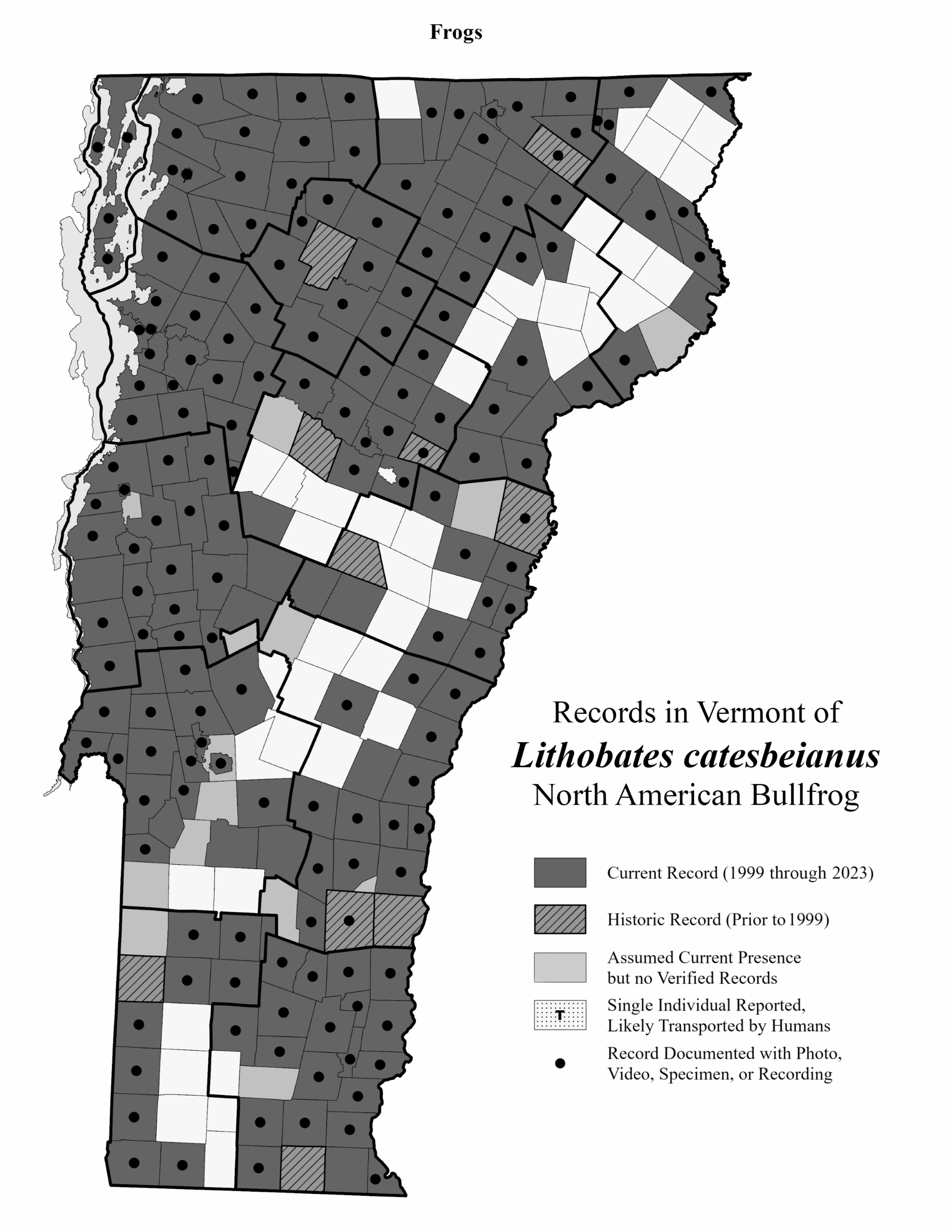
There are still 47 towns in Vermont from which North American Bullfrogs have never been reported, and 32 towns from which we need updated photos or recordings. Most of these towns are at higher elevations, mid-state, or in the Northeast Kingdom. Bullfrogs should be calling now and for the next five weeks on warm evenings. If you hear a Bullfrog in any of these target towns, please record the call by taking a short video or voice memo with your cell phone and sending it our way. I have attached our most recent distribution map (lower photo below).

Spring Salamander
Ian O’Donnell contributed the photo below of a Spring Salamander in Tunbridge. Since Spring Salamanders don’t show up in lawns and gardens, don’t migrate across roads, and don’t lay their eggs on land, they are not often found by accident. To find them, you need to make a conscious effort by turning flat rocks along the edges of cold, clear, mountain streams. They are well worth the effort, though. They are both large and beautiful.


