Herp Update: Fundraiser, Late Season Activity – December 2, 2025

Our Annual Fundraiser has reached the Halfway Point
We have raised over $12,000 since we began our annual fundraiser on November 11. This is just short of halfway to our goal of $25,000. Thanks again to all of you who have already donated. We realize that for many of our supporters, there are certain times of the year when it is most convenient for them to donate. You can be assured we will be happy to receive donations whenever it works best for you. That said, if you have not yet donated but are in a position to donate now, donations can be made in a few ways:
- By sending a check made out to James S. Andrews to: The Vermont Reptile and Amphibian Atlas, 642 Smead Road, Salisbury, VT 05769 (your donation stretches further, with no fees or overhead expenses)
- Through our GoFundMe site
- Via our online shop or the PayPal button on our website
- If you need to donate to a 501(c)3 non-profit, you can send a check made out to Vermont Family Forests to: The Vermont Reptile and Amphibian Atlas, 642 Smead Road, Salisbury, VT 05769.* Vermont Family Forests is our fiscal sponsor, and they are a registered 501c3 non-profit.
*If your fund requires that a check be sent directly to Vermont Family Forests (P.O. Box 254, 14 School Street, Suite 202A, Bristol, VT 05443), please notify them that your donation is for the Vermont Reptile and Amphibian Atlas, and please also contact us directly about your donation.
**Checks should not be made out to the Vermont Reptile and Amphibian Atlas. We can’t cash them that way.
Late Season Herp Activity
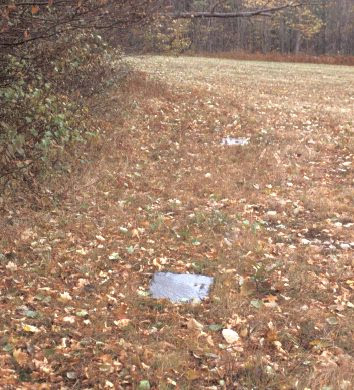
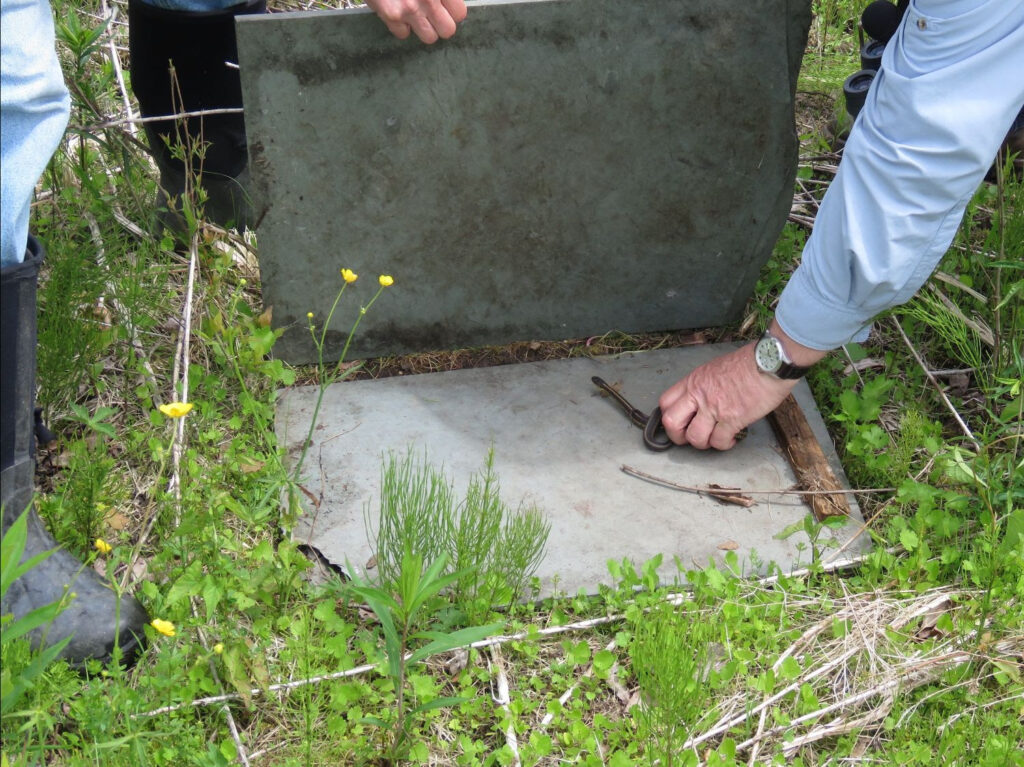
On November 6, we finished our fall snake monitoring for the year. We have a series of slate sandwiches (shown above and below) that we check weekly every other fall. We have been monitoring this transect of 45 covers since 2001 as part of the Colby Hill Ecological Project in Lincoln. The photo below shows the two slates and the divider that make up each cover object. The slate holds the heat and provides cover from predators. On our last day, we found one adult and one juvenile Red-bellied Snake under the covers.
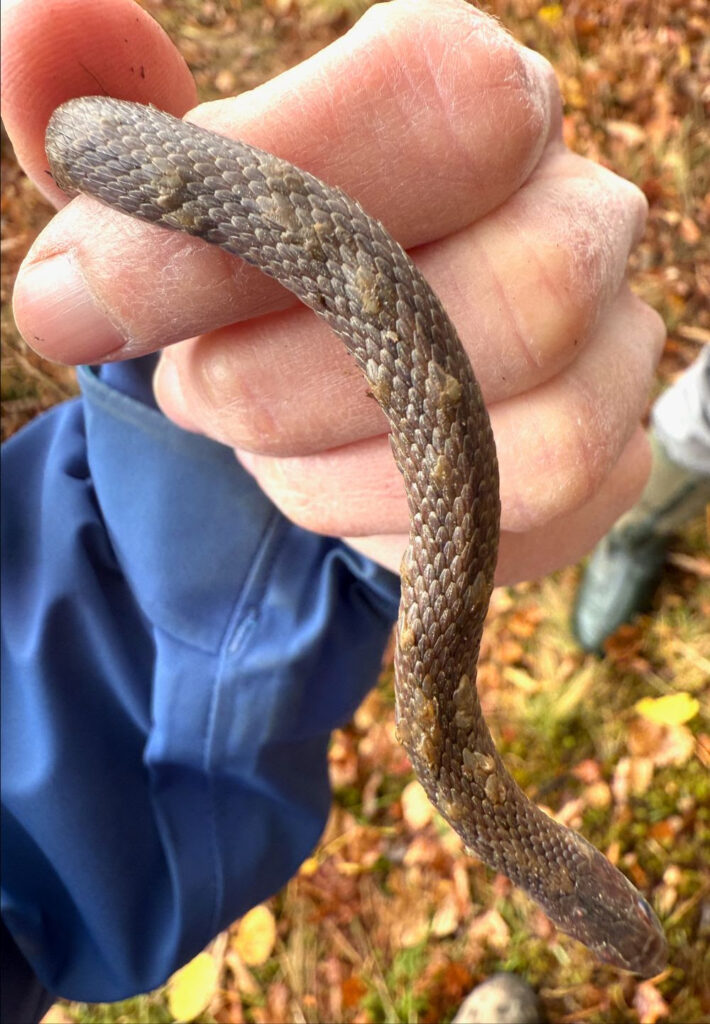
Sadly, the adult Red-bellied Snake was badly infected with what appears to be snake fungal disease. Notice the small bumps along the body of the snake below. This disease was first diagnosed in 2006 in New Hampshire Timber Rattlesnakes, but has since been seen in 23 states and many other snake species. Most snakes survive minor infections, but the disease has reduced populations of some rare snakes.
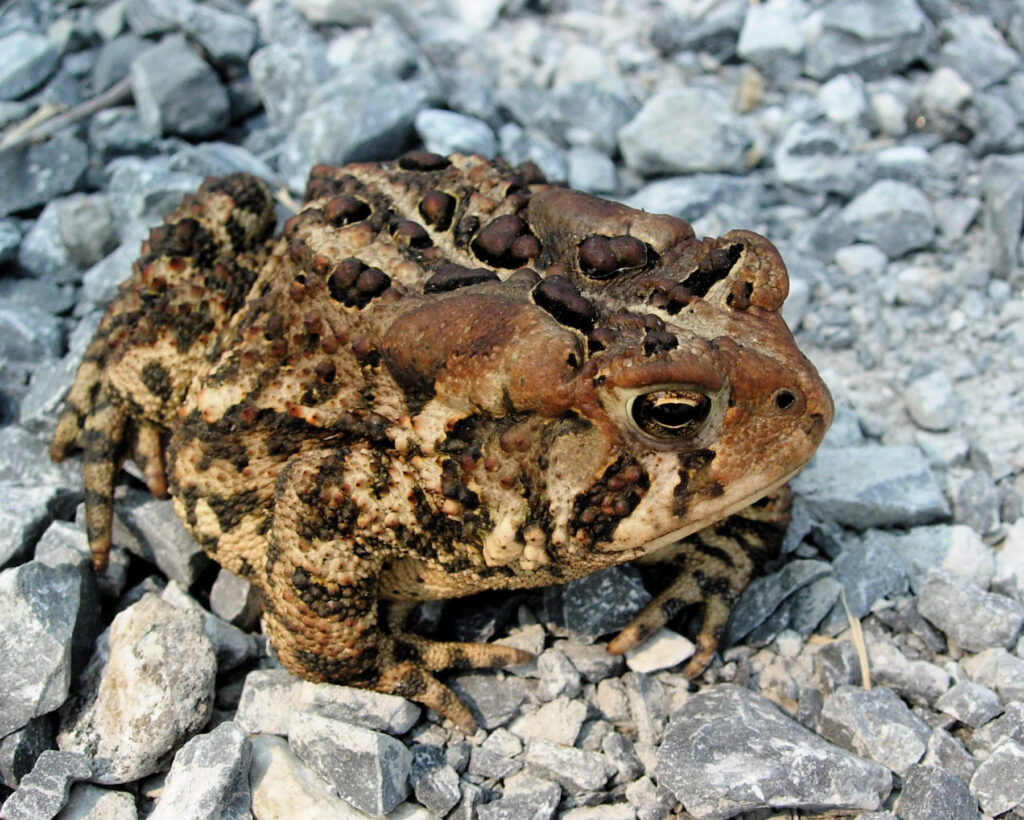
The relatively warm nighttime rains over the last month generated two late-season reports of American Toads. They are not known to remain active into the late fall. Jim Wilson reported one moving on a road in Grafton on November 6, and Sue Morse reported one moving in Jericho on November 26. Amy Alfieri took the great American Toad photo below a couple of years ago.
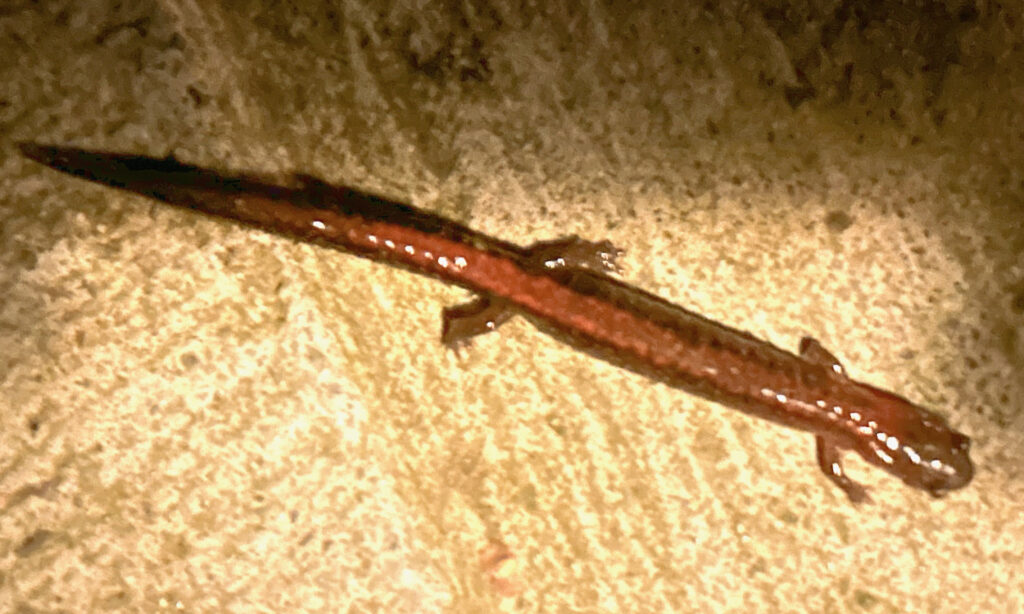
Carolyn Crowley reported the Eastern Red-backed Salamander shown above on November 21. Unlike the American Toad, Eastern Red-backed Salamanders are often seen moving during thaws throughout the winter.
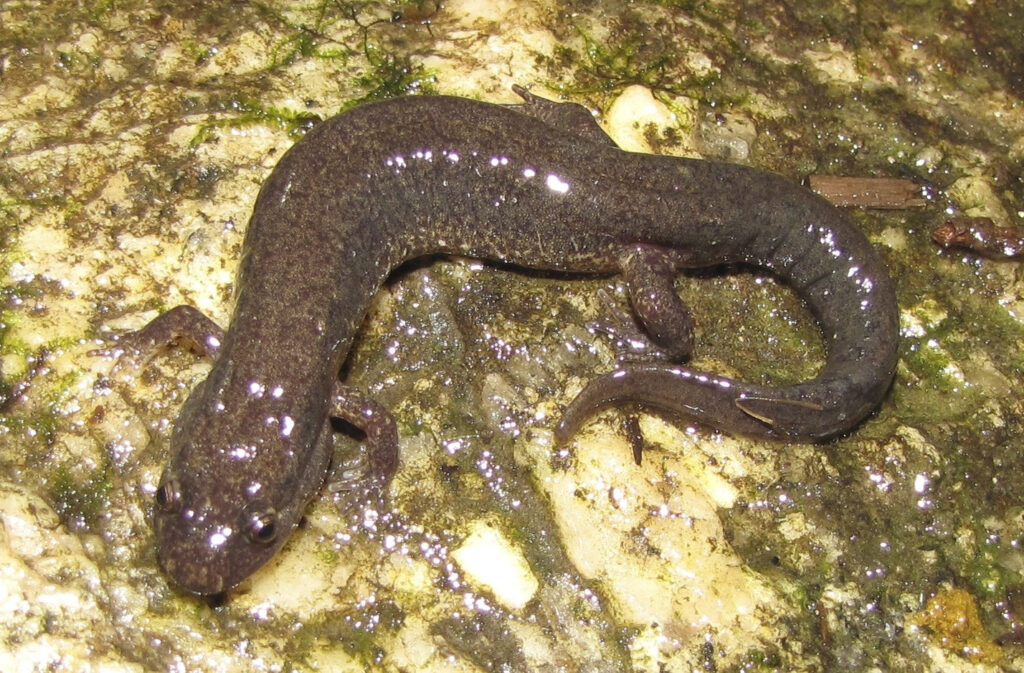
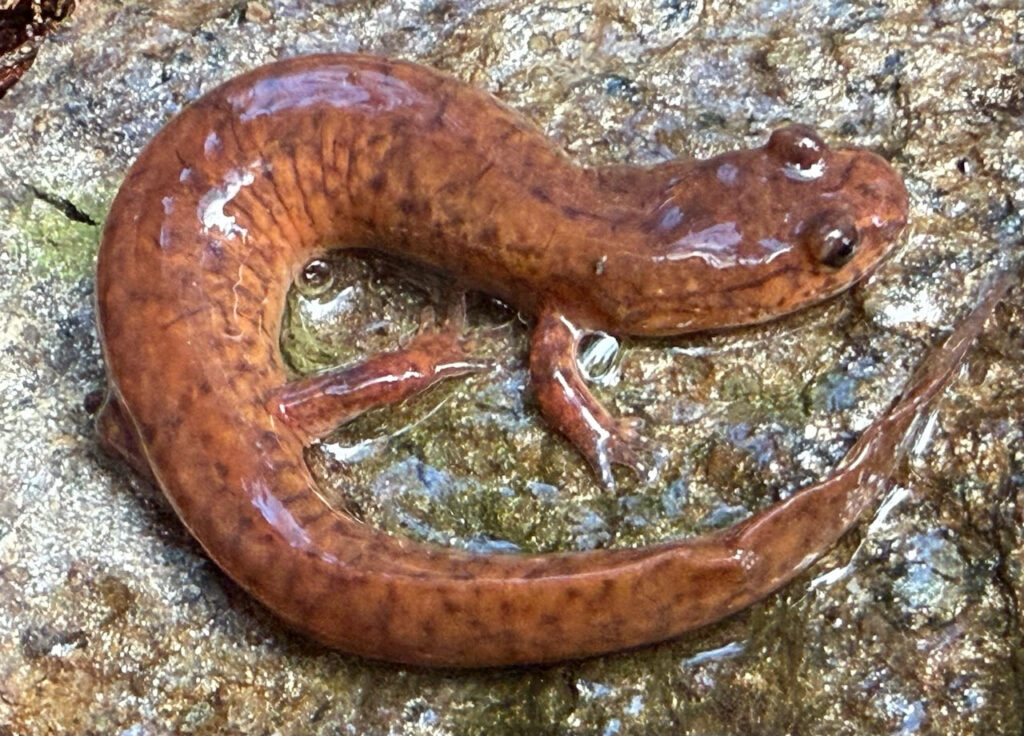
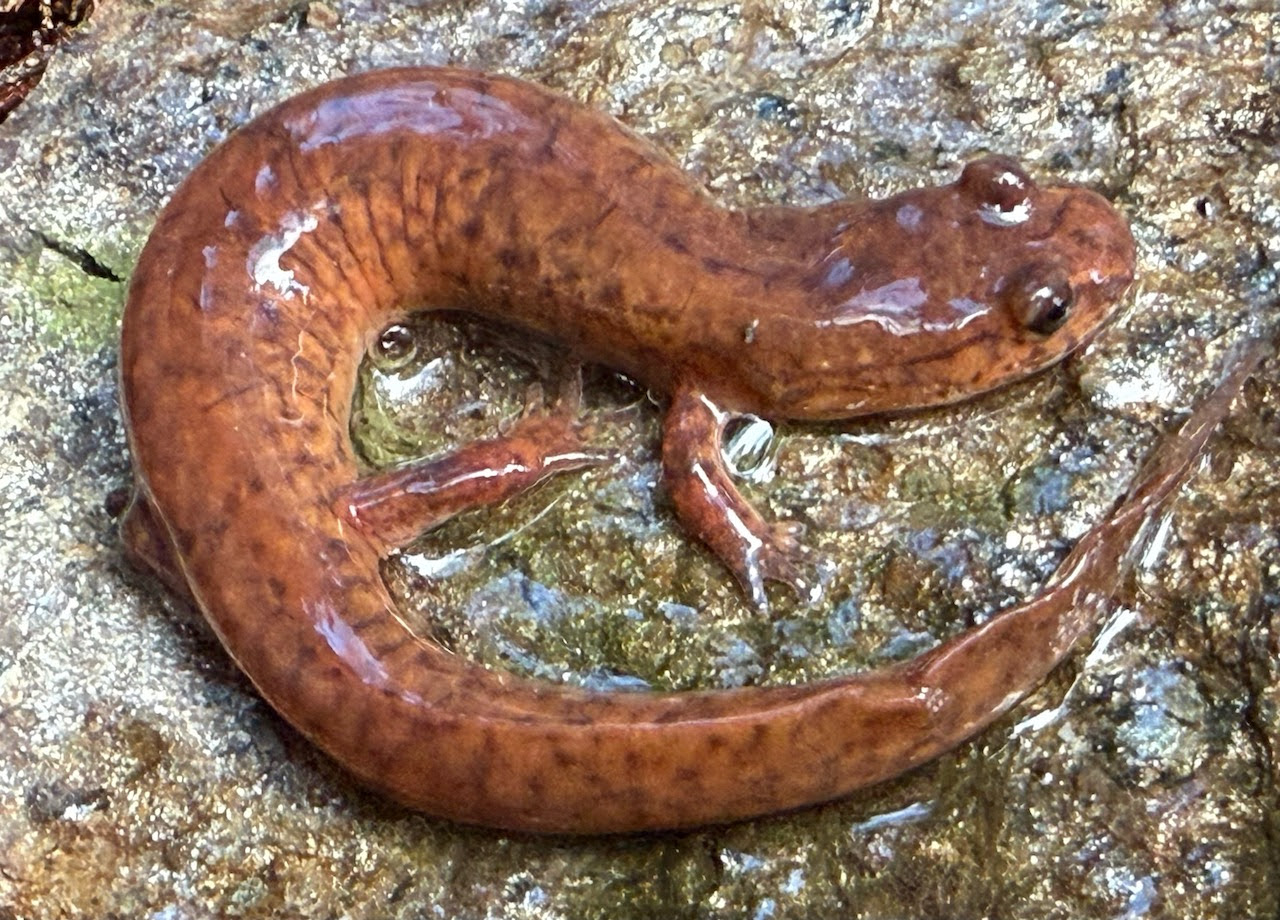
Kindle Loomis found both a Northern Dusky and a Spring Salamander in a seep in Huntington on November 8th. A variety of amphibians can be found overwintering in seepages where the groundwater keeps them from freezing during the winter. The top photo below shows a Northern Dusky photographed by Megan Kane. The bottom photo shows a Spring Salamander photographed by Kate Kelly.