Herp Update: Dead Creek Wildlife Festival, Snake Migration – October 3, 2025

The Turtles of Vermont at Dead Creek this Saturday
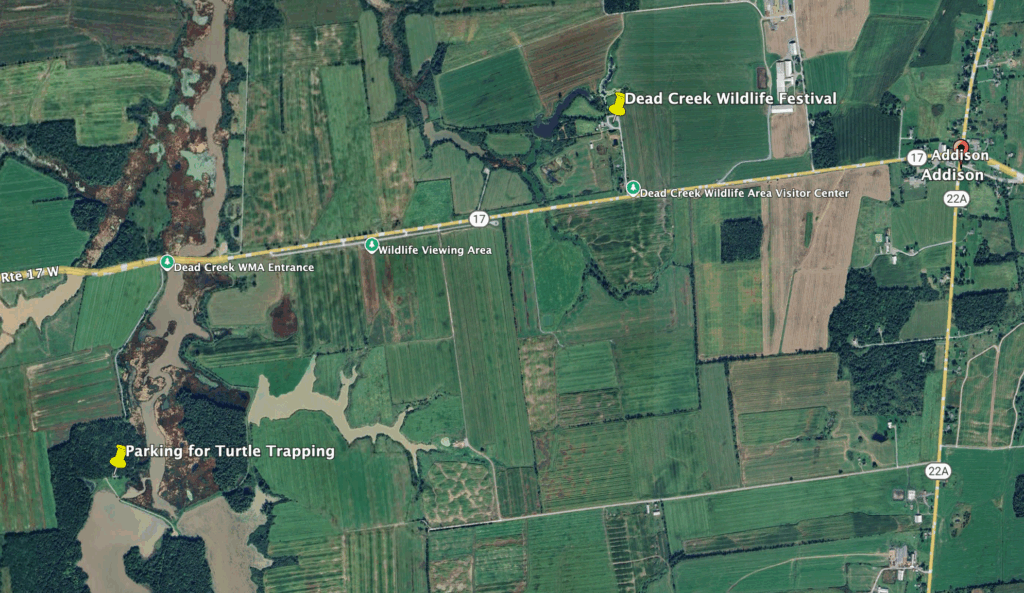
Herpers, tomorrow, Saturday, October 4, I will be talking turtle at the Dead Creek Wildlife Festival in Addison. From 10 to 11 AM, I will be giving a PowerPoint presentation on Vermont turtles. Then at 2 PM, I will be checking three turtle traps placed near the Brilyea Access of Dead Creek. We will almost certainly catch Painted Turtles, and we might catch a Snapping Turtle or two as well, along with a few fish. Attendees will be able to handle any turtles we catch before we return them to the water. Both events are free, and there are many other wildlife-related events to check out at the festival as well. Bring the family and join us. It will be fun.
Recent Herp Activity
This time of year, snakes are moving to their winter den locations. For many species, this means moving out of summer foraging areas (often wet or overgrown fields or wetland edges) into nearby rocky uplands. This movement usually takes place on warm, sunny afternoons. Often this results in concentrated crossing areas that are in many ways similar to the amphibian crossing areas we check on warm, rainy nights in spring. I used to take my two daughters to a snake crossing area every fall to see the Red-bellied Snakes, Dekay’s Brownsnakes, and Common Gartersnakes. Kate Kelly and I have been checking that location this fall. On September 30, we spent roughly 30 minutes walking over and back through that 200-meter section of dirt road. On that visit, we found 21 Dekay’s Brownsnakes, three Red-bellied Snakes, and four Common Gartersnakes. Sadly, all but one of them had been run over, even though the road is very rural and has limited traffic. That section of road had been graded three days earlier, so we knew we were looking at three days’ worth of road-killed snakes. Since the road surface is warm and exposed to full sun, some of the snakes linger on the road to raise their body temperatures. Of course, that can mean death for the snakes.
During our recent travels around the state, we have also seen many live snakes crossing roads while moving up drainage. Most snakes are too small to see while driving, but some of the larger snakes are visible from a car. When we see them, and if it is safe for us to stop, we move them to the uphill side of the road. Keep your eyes open for snakes on the road over the next few weeks. If you know of a likely snake-crossing spot on a quiet road, park your car and walk that section of road. We would love to get reports of what snakes you see, and where.
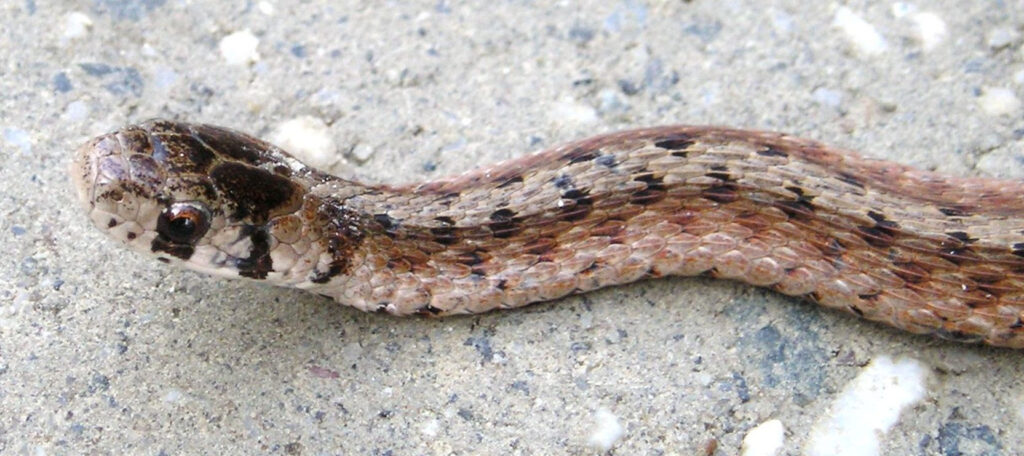
The photo of the Dekay’s Brownsnake below was taken by Toby Alexander. The black marks on the top of the head, under the eye, behind the eye, and on the sides of the neck are great field marks. Plus, brown snakes always have a brown background color, as their name implies.
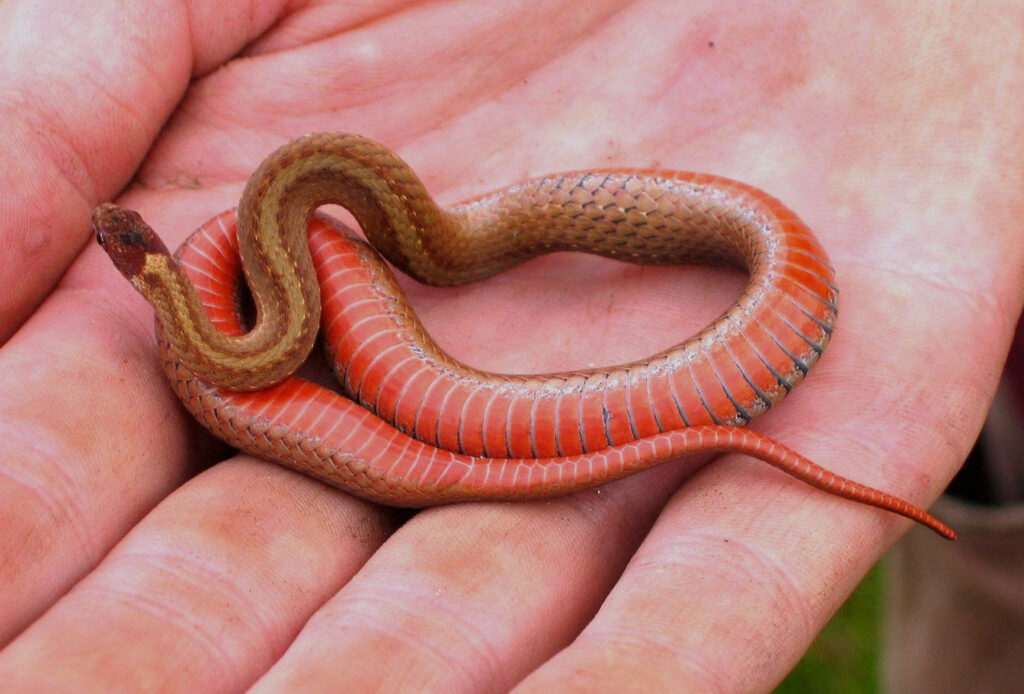
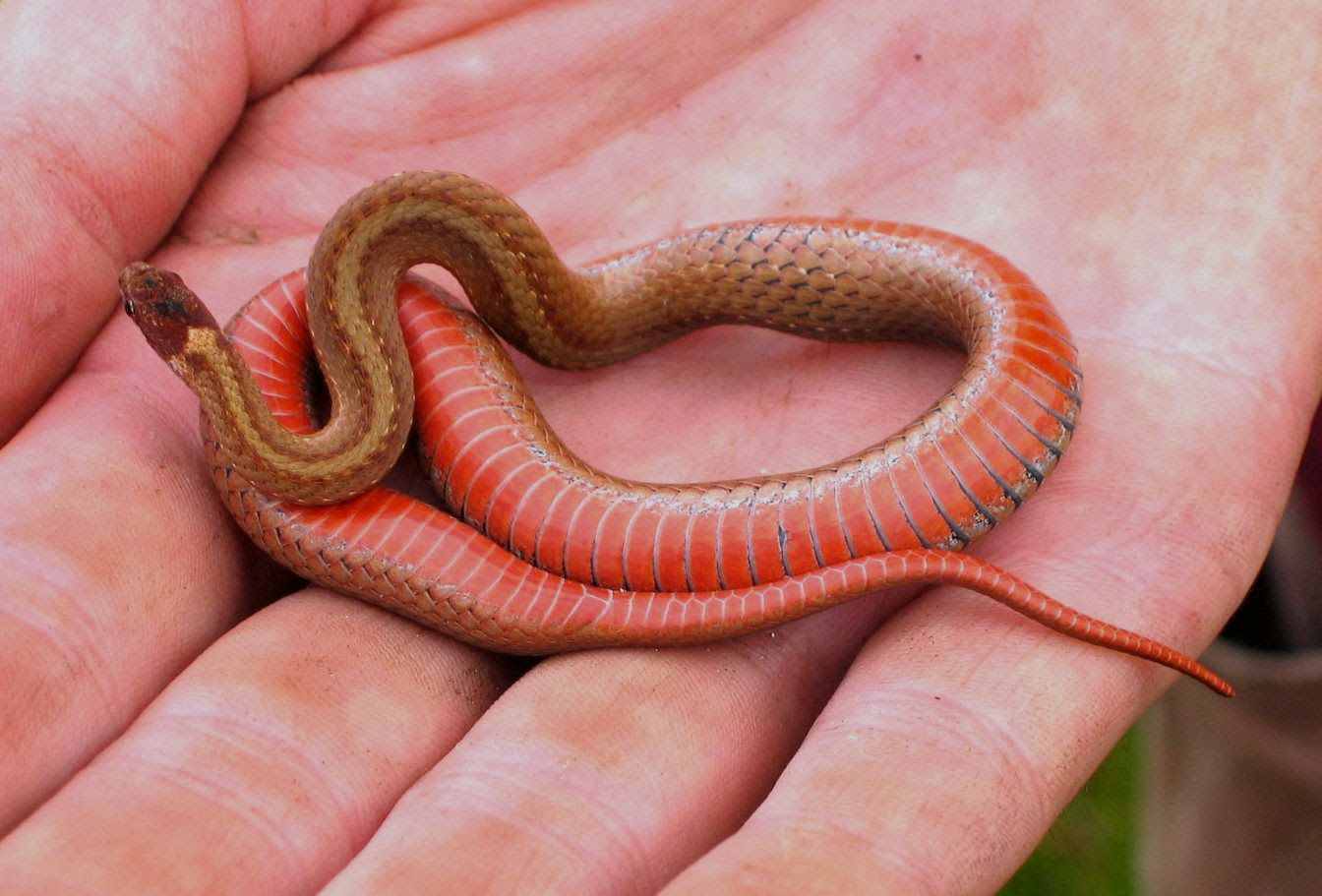
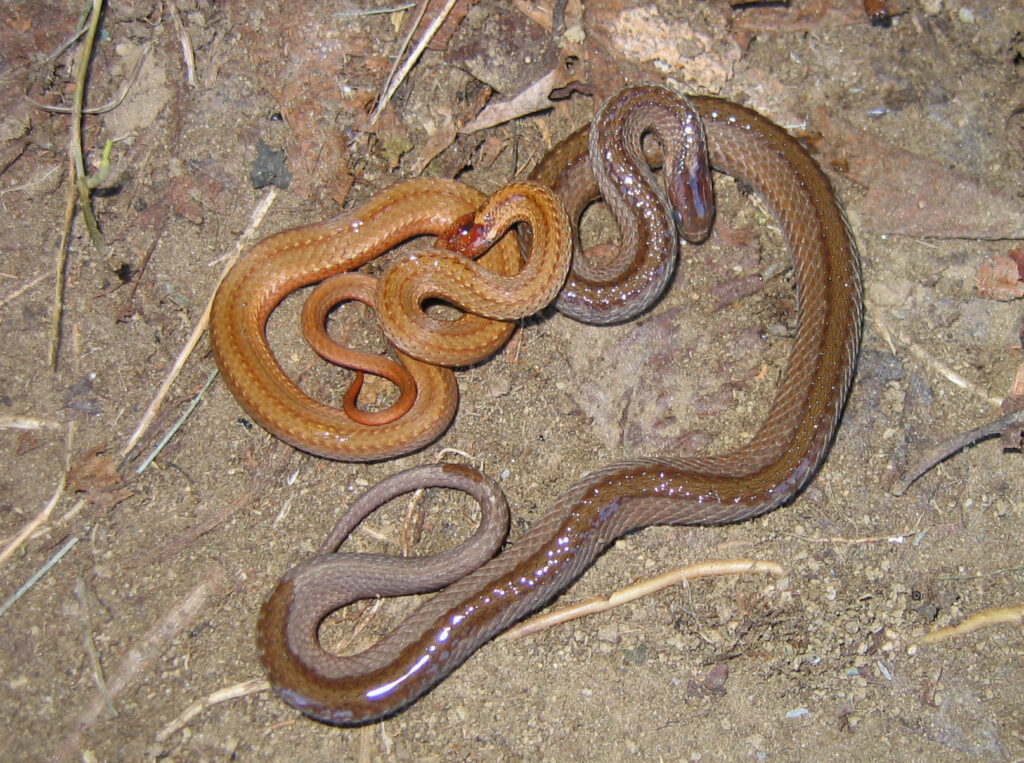
Unlike Dekay’s Brownsnakes, Red-bellied Snakes like those below have a variety of background colors. Some are shades of brown, some gray, and others are black. But they all have a red belly with three light markings on the neck.
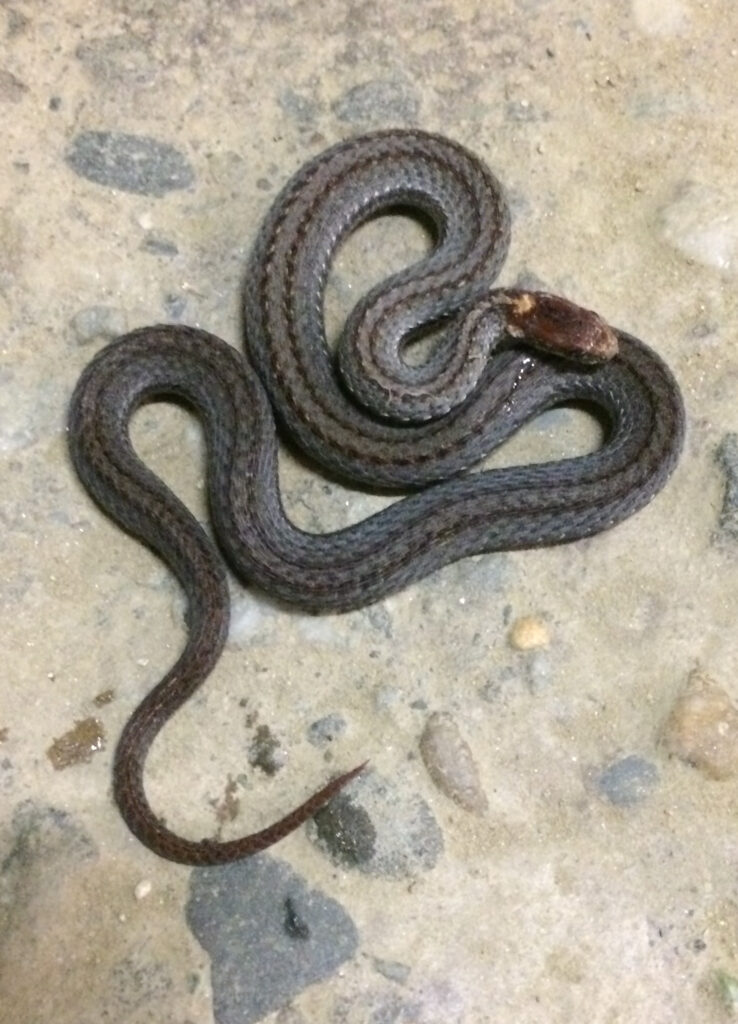
The gray Red-bellied Snake in Heather Bushey’s photo below shows the light neck markings well. There is one light mark on the back of the neck, and one on either side.
The photo shows the red belly well. It is a very consistent field mark.