Herp Update: Printed Atlases Available, Amphibian Migration – October 24, 2025

Printed Copies of the 2025 Update of our Vermont Reptile and Amphibian Atlas are now Available!
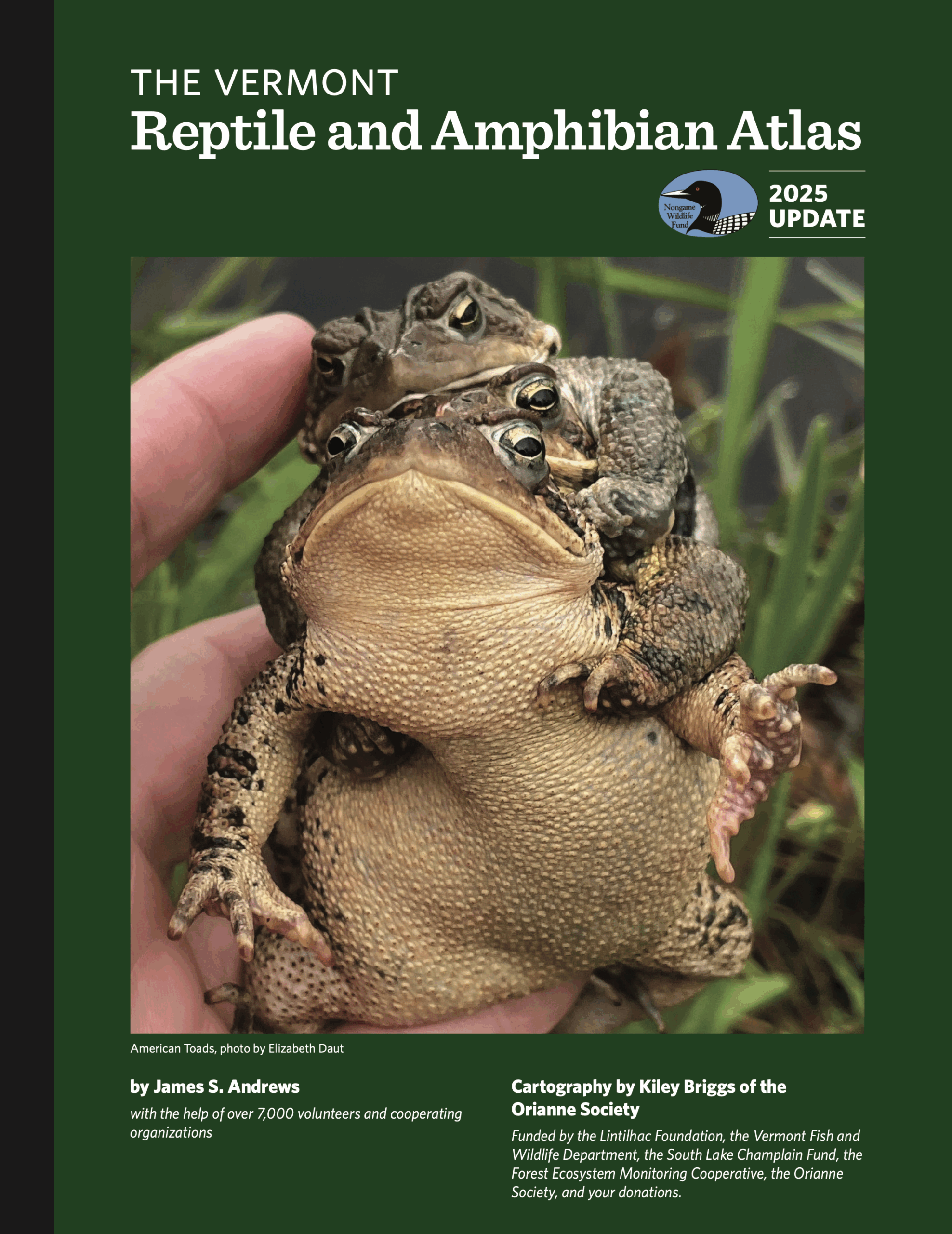
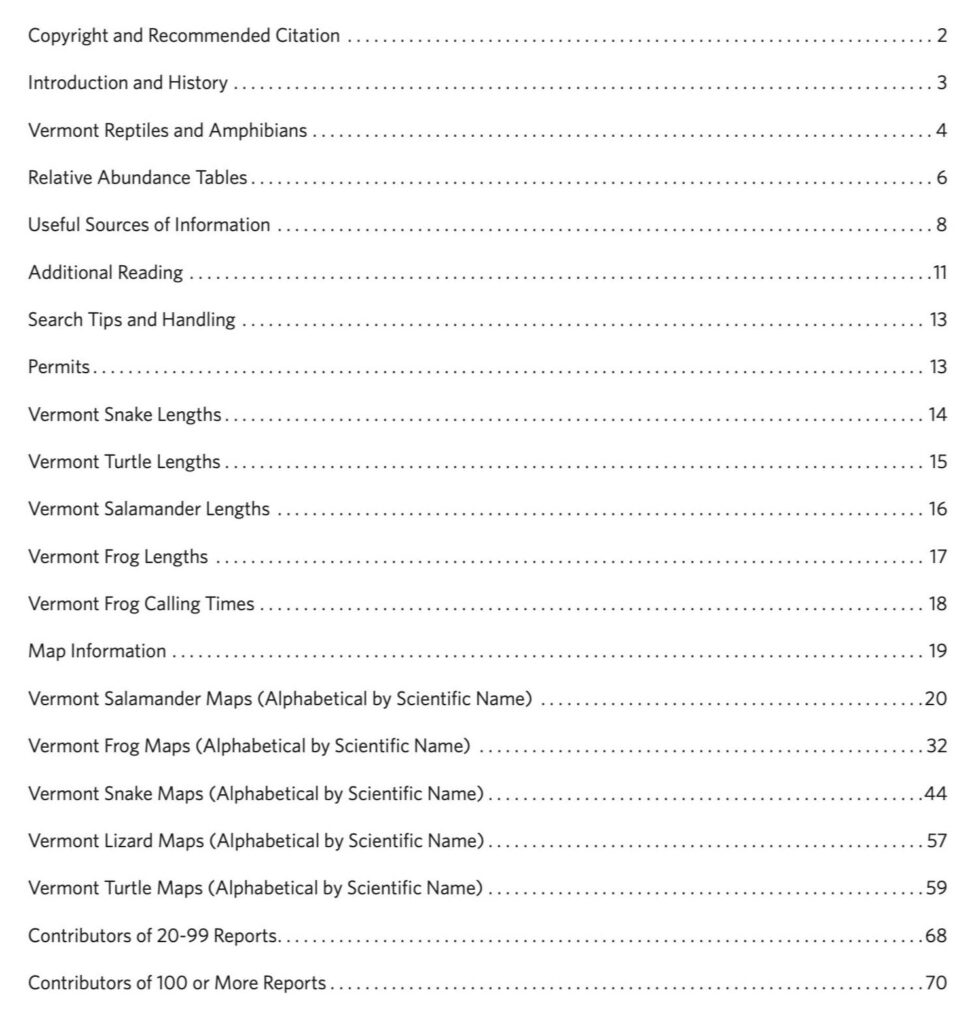
We just picked up copies of our 2025 Update of The Vermont Reptile and Amphibian Atlas from the printer. It is exciting for us to see the progress we have made (with your help) on our distribution maps as well as the many updated charts resulting from our increased data on Vermont herptiles. Admittedly, all the information our printed atlas contains is also available on our website at VtHerpAtlas.org, but if you are like me, you enjoy handling, perusing, and referring to printed information. We try to update our printed editions every five or six years. Our atlas is not a field guide, but rather a series of maps, tables, and charts showing the information that we all have gathered on Vermont herptiles over the last 31 years (see the table of contents below). Printed copies cost $15.00 plus tax and shipping. You can order them through our online shop. Check it out.
The photo on our cover page below was taken by Elizabeth Daut.
 Current Herp Activity
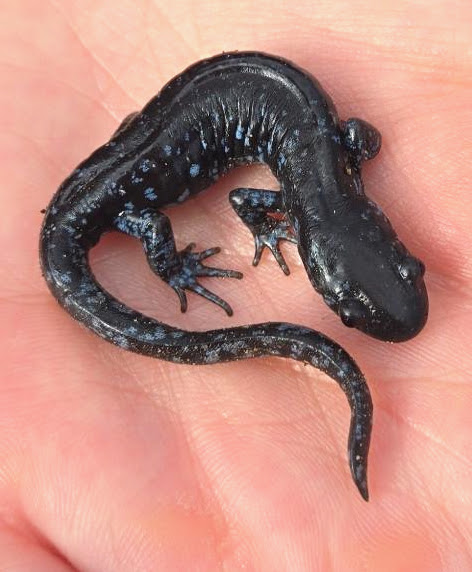
The recent rains have finally given our amphibians a chance to move to their overwintering locations and pick up a snack on the way. If we get another nighttime rain, you should consider visiting your favorite amphibian crossing location and checking for fall uphill migration. Some amphibians move back uphill soon after laying their eggs, but many others linger in the moist lowlands and don’t move back uphill until the fall. Blue-spotted and Eastern Red-backed Salamanders are well known for staying in the moist lowlands all summer and not moving uphill until October. Checking our database, we have reports of significant uphill migrations of Blue-spotted Salamanders here at Morgan Road in Salisbury, until November 17. We have had significant migrations of Eastern Red-backed Salamanders until December 6, and migrations of Four-toed Salamanders as late as November 18th. Smaller numbers of other amphibians from Spotted Salamanders to Gray Treefrogs and Spring Peepers will often be mixed in. The latest in the year we have seen any amphibian activity at Morgan Road is December 21 (two Eastern Red-backs).
As you may know, the Eastern Red-backed Salamanders don’t lay their eggs in water, but they need moist soils, so at many locations they migrate into the moist soils from higher and drier overwintering locations, and now they are moving back uphill and then below the frostline for the winter. If you get out looking, please let us know what (and how many) you find.
Ada Wetmore took the photo of the Blue-spotted below in November last year.
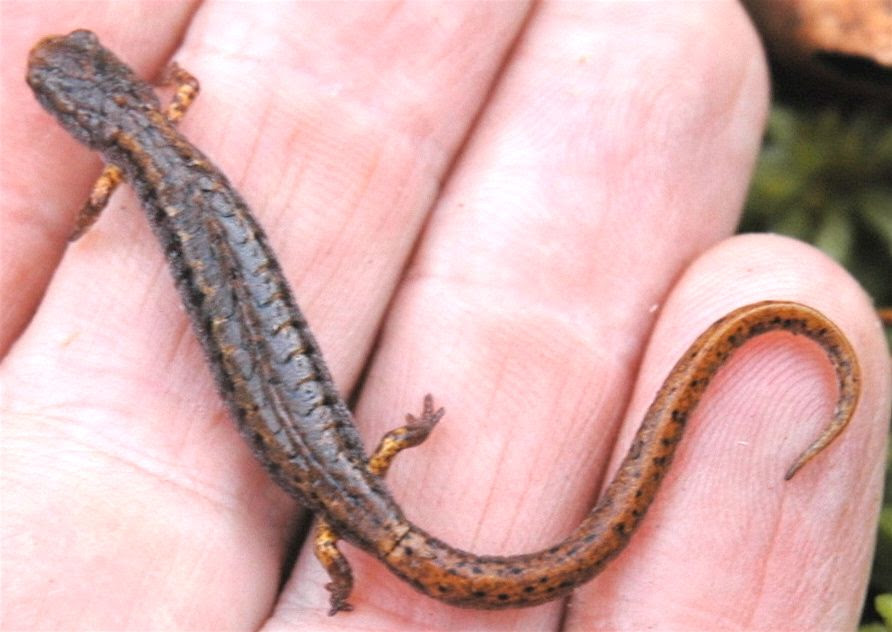
Chris Slesar took the photo of the Four-toed Salamander below. At first glance, they look like an Eastern Red-backed Salamander in size and shape, but the variegated pattern, the prominent costal grooves, and the constriction at the base of the tail are all good field marks that separate them from Eastern Red-backs.
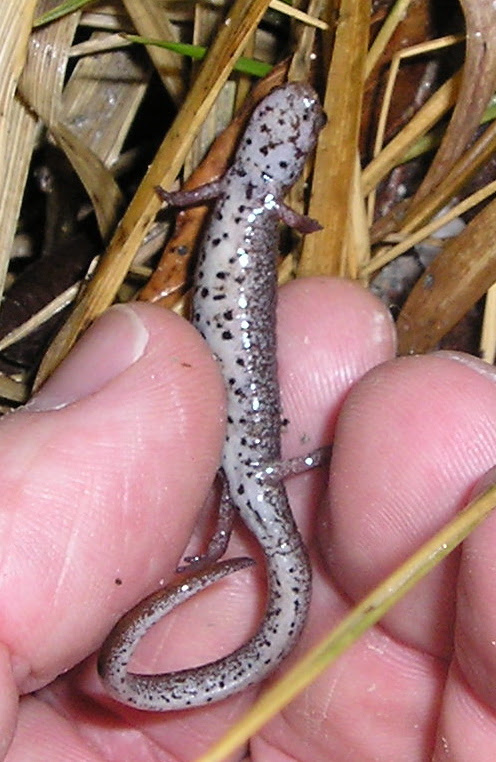
The most obvious field mark of a Four-toed Salamander is the bright white underside with scattered black dots shown in Toby Alexander’s photo below. Four-toed Salamanders are also much easier to catch (slower) than Eastern Red-backed Salamanders.
Fall is also a good time to find & report Northern Two-lined Salamanders.
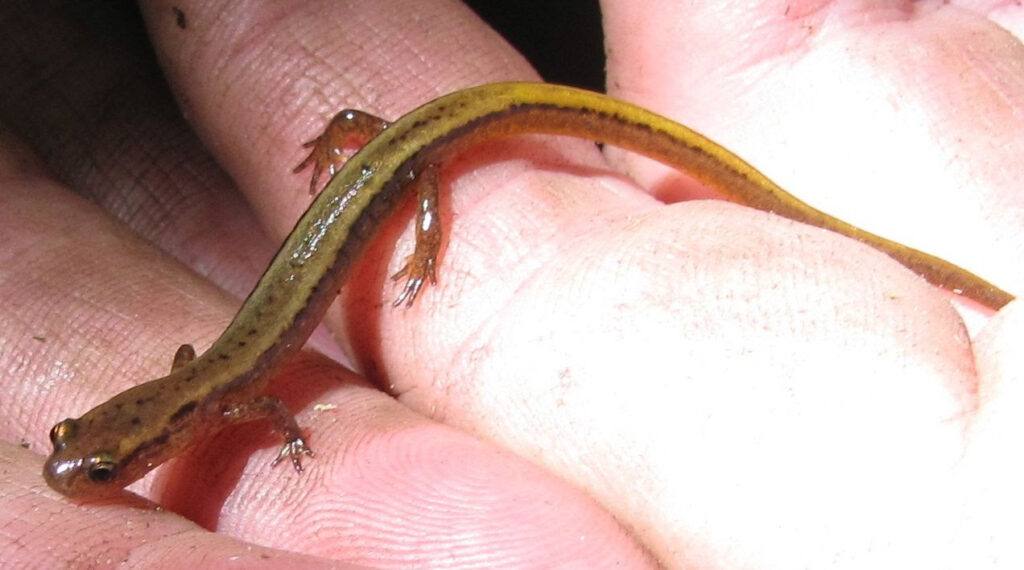
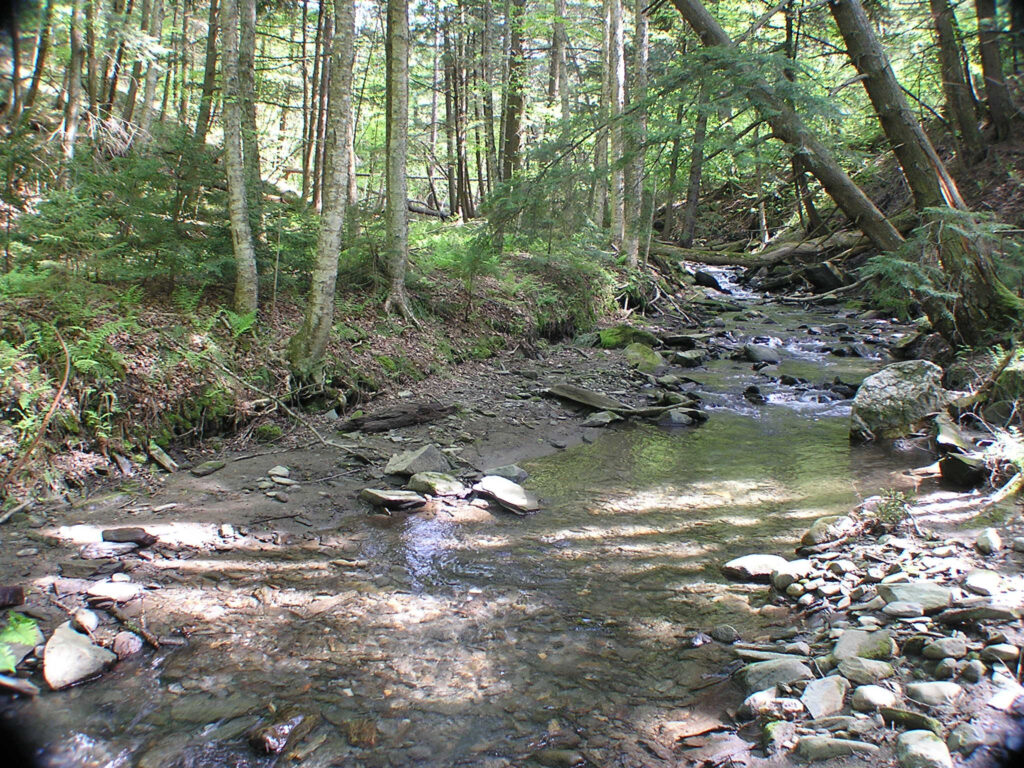
Northern Two-lined Salamanders are another species that is active and findable in streams even into the fall and winter. We need updated records of Two-lineds from Barton, Brownington, Burlington, Chelsea, Enosburgh, Morgan, Peacham, St. Johnsbury, Townshend, and Westmore. If you or someone you know live in or near these towns/cities, we could use your help. Two-lined Salamanders are quite easy to find by turning rocks on the edges of small, rocky, forested streams. An ideal rock is flat, and halfway in and halfway out of the water, but as long as the ground is moist, stream salamanders are often found a few feet away from a stream. Always return the rock to its original place to preserve the habitat for these and other critters, then let your find go next to it so you don’t crush it! Make sure to keep your phone ready to snap a photo and send it to us via our website! As fall moves into winter, these salamanders will be found fully in the water or seeps (instead of up on land).
In addition to the towns mentioned above, there are several towns where this species has never been reported: Alburgh, Grand Isle, Highgate, Isle La Motte, Newport City, North Hero, South Hero, and Vergennes. You may notice a pattern here; we expect that Northern Two-lined Salamanders are not found in the Champlain Islands at all, due in part to the islands’ isolation after the Champlain Sea retreated and the islands were exposed, and in part due to a lack of appropriate habitat (rocky streams with at least some elevation to them).
Side note: if you were to try herping in below freezing temps, keep in mind that these animals should always be kept in water and not exposed to the freezing air!
Photos: Northern Two-lined Salamander by Jim Andrews, and stream habitat by T. Anderson