Herp Update: Snakes, Salamanders, Maine Herps, and Instagram – September 6, 2025

Recent Herp Activity
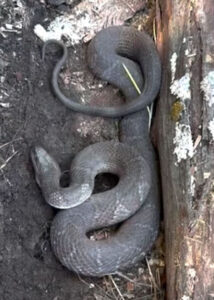
Over the last month, we have received a few reports of Common Watersnakes found quite a distance from water. It seems likely that their normal foraging areas (wetlands) dried out, and they are hiding out while waiting for rain, but this is just a guess. The photo below was taken by Kathy Mandigo in Salisbury. Common Watersnakes are a thick, heavy-bodied snake. They are not aggressive, but they are quick to defend themselves when handled. They are curious and, when in the water, will check out small movements, hoping to find frogs or fish. I have had them check out my feet while wading and fishing. We received a report of one causing a mass exodus of swimmers and waders at Sandbar State Park when it swam through the swimming area. Of course, the swimmers and the waders were in no danger.
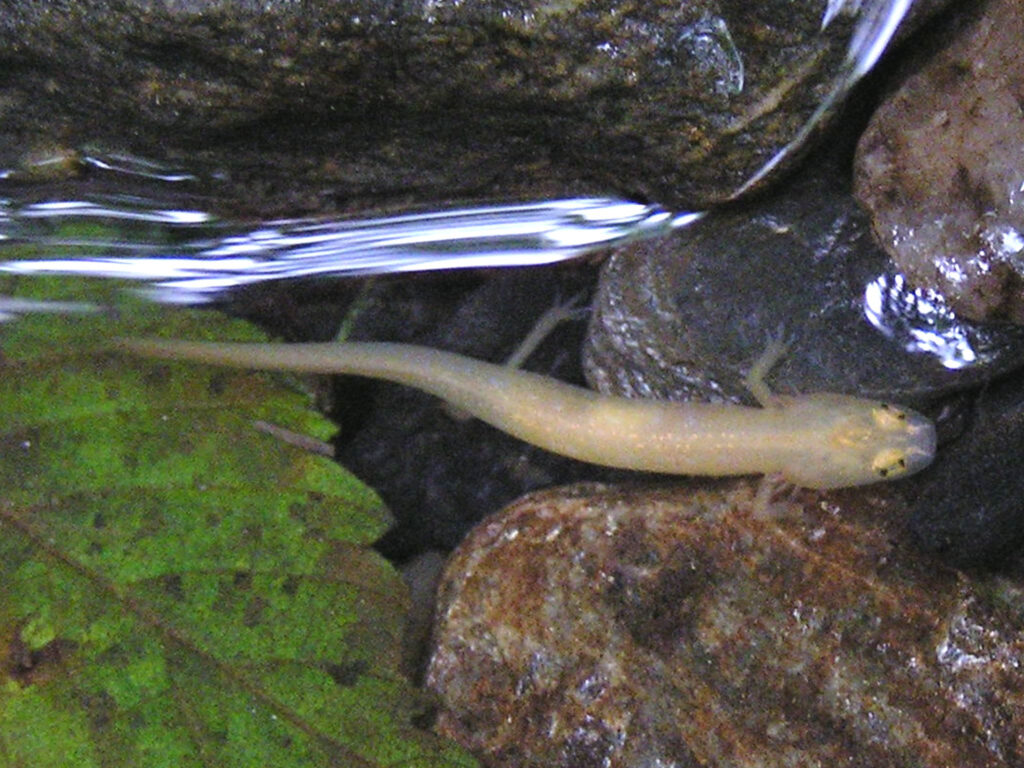
Some of the streams we have been surveying have stopped flowing and only contain small pockets of water. We still have been able to find Northern Two-lined and Northern Dusky Salamanders under cover objects in moist areas along the stream corridors, but Spring Salamanders have been very difficult to find. Spring Salamanders spend a few years in their aquatic larval stage, so we wonder how many of their larvae survive a drought like our current one. If you look carefully at Kurt Waggoner’s photo of a larval Spring Salamander below, you can see the external gills just in front of the front legs. They lose those gills when they metamorphose and become terrestrial.
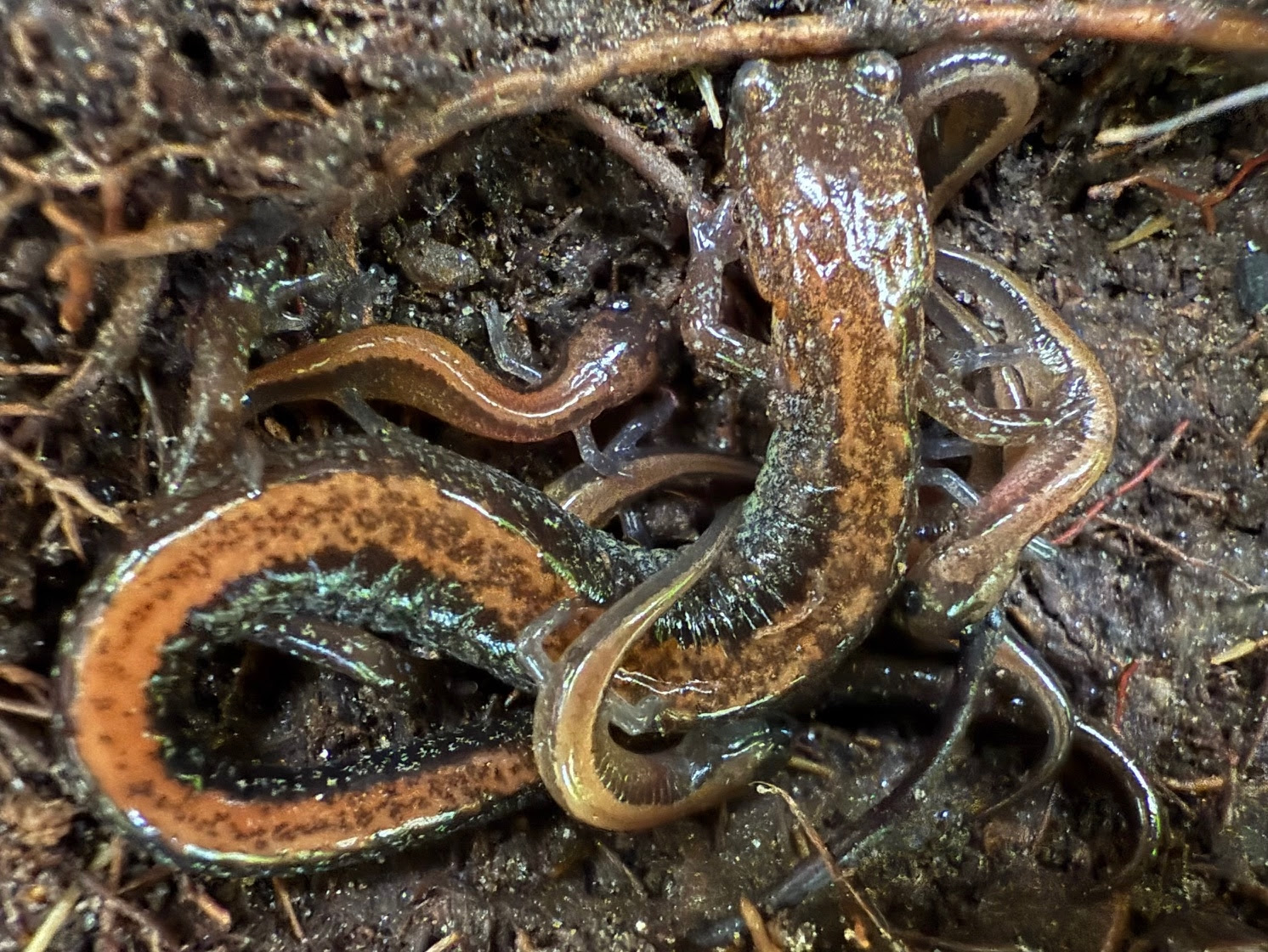
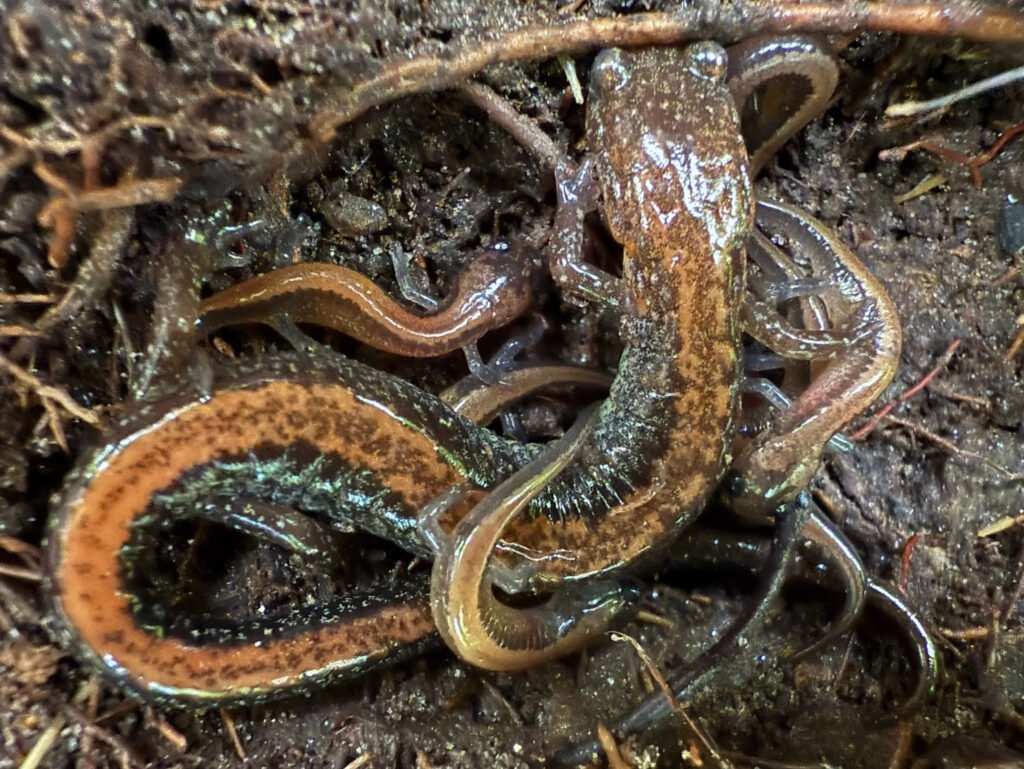
Every year prior to starting our annual herptile population monitoring for the Colby Hill Ecological Project in Lincoln, we replace rotten cover boards and dividers and gather some preliminary data at the same time. This year we found an adult Eastern Red-backed Salamander with seven newly hatched young. Eastern Red-backed Salamanders are Vermont’s only salamander that does not have an aquatic larval stage. The eggs are laid on land, and the hatchlings emerge from the egg looking like miniature adults. You can see the adult and the young in Kate Kelly’s photo below.
Spring Peepers have started making their fall calls. At this time of year, they call individually and from the woods, instead of from wetlands.
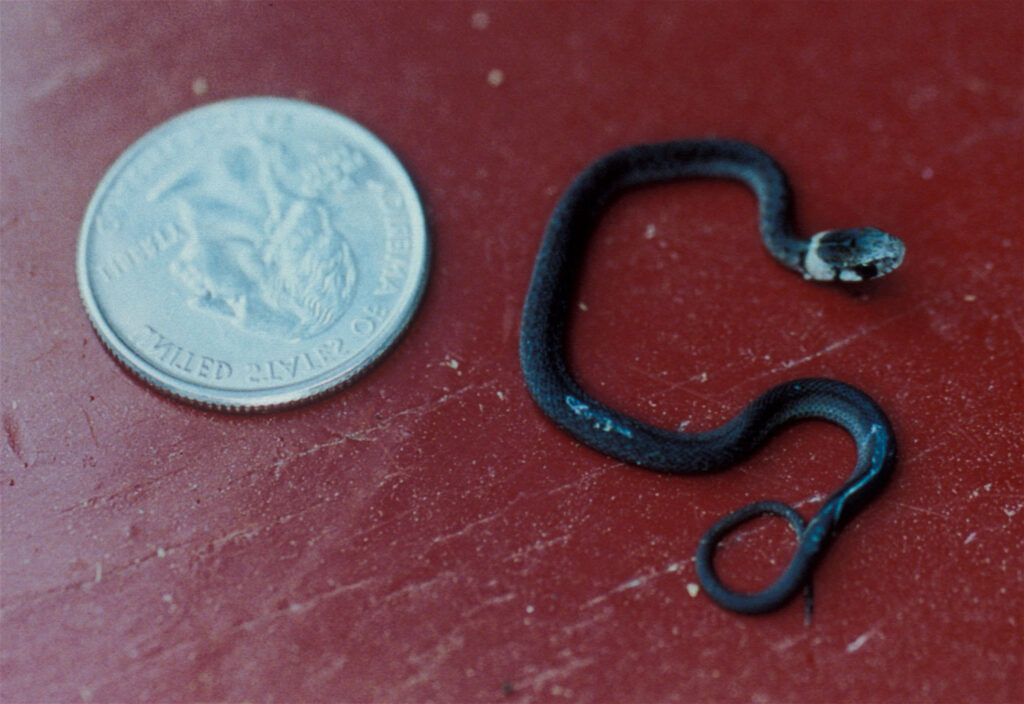
At our snake-monitoring site in Lincoln, we have been finding many young Common Gartersnakes and a single young Dekay’s Brownsnake. Both these species give live birth, rather than lay eggs. Giving live birth is an adaptation that allows some snake species to live further north. Mother snakes can move to stay in the sun and maintain higher body temperatures. As a result, their young can develop faster. I took the photo below of a baby Dekay’s Brownsnake. Notice that they have a ring around their necks. This ring disappears as they grow.
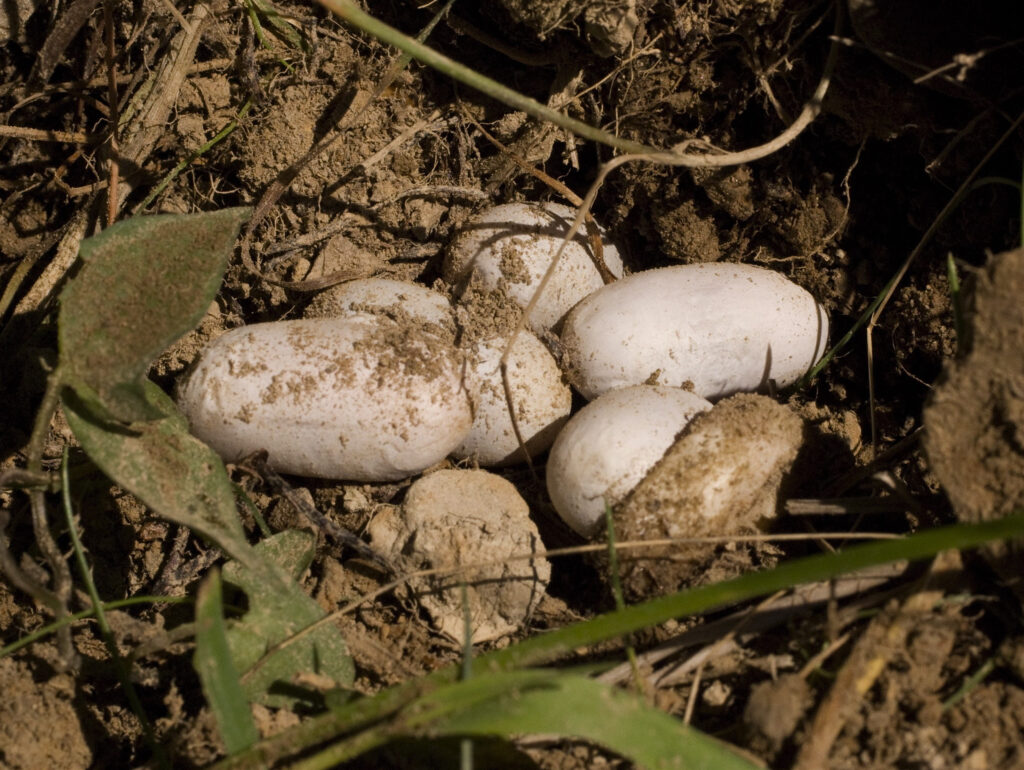
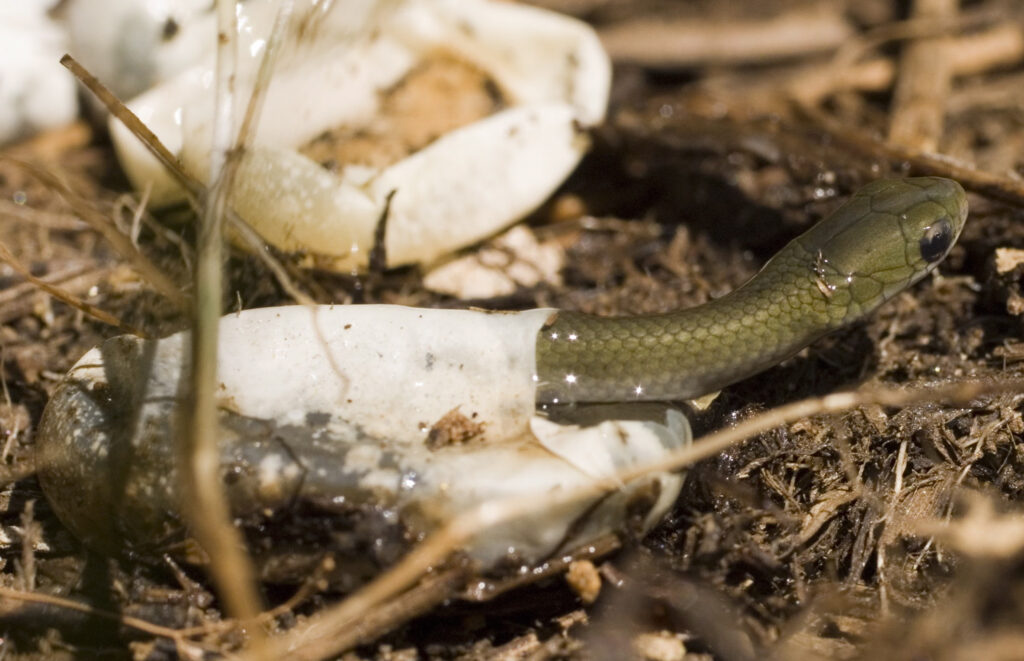
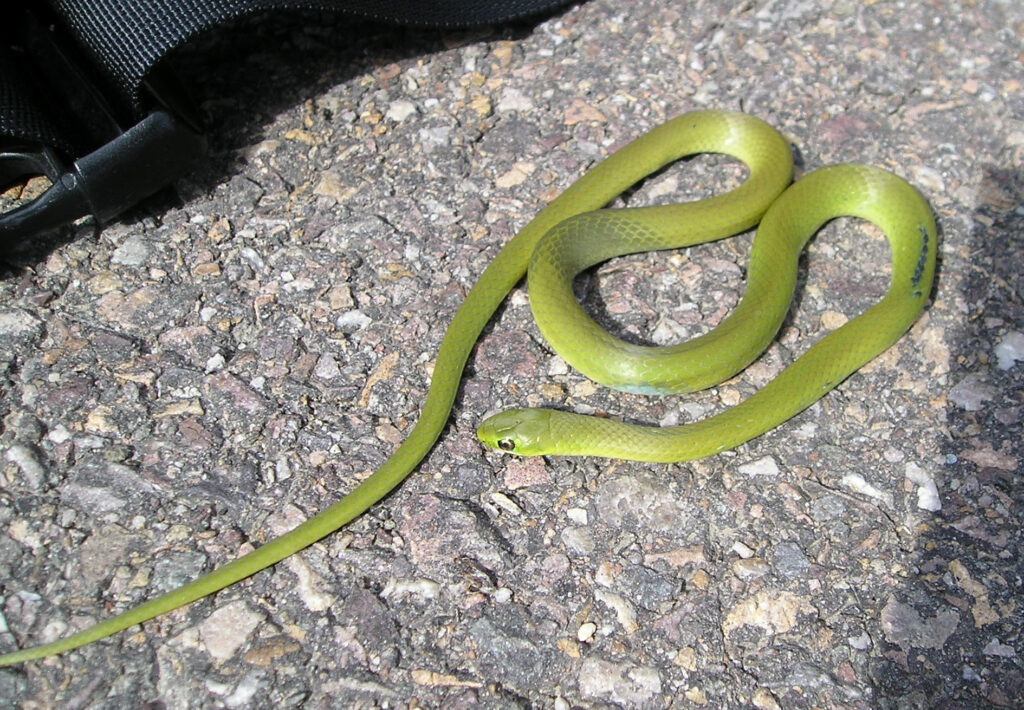
We have also received a handful of reports of Smooth Greensnakes over the last few weeks. Smooth Greensnakes lay eggs, but they retain their eggs within their bodies for a longer time than southern egg-laying snake species. As a result, the eggs hatch relatively soon after they are laid. Kiley Briggs took the photos below of Smooth Greensnake eggs and a young neonate hatching. Toby Alexander took the photo of the adult.
Great New Regional Herp Guide
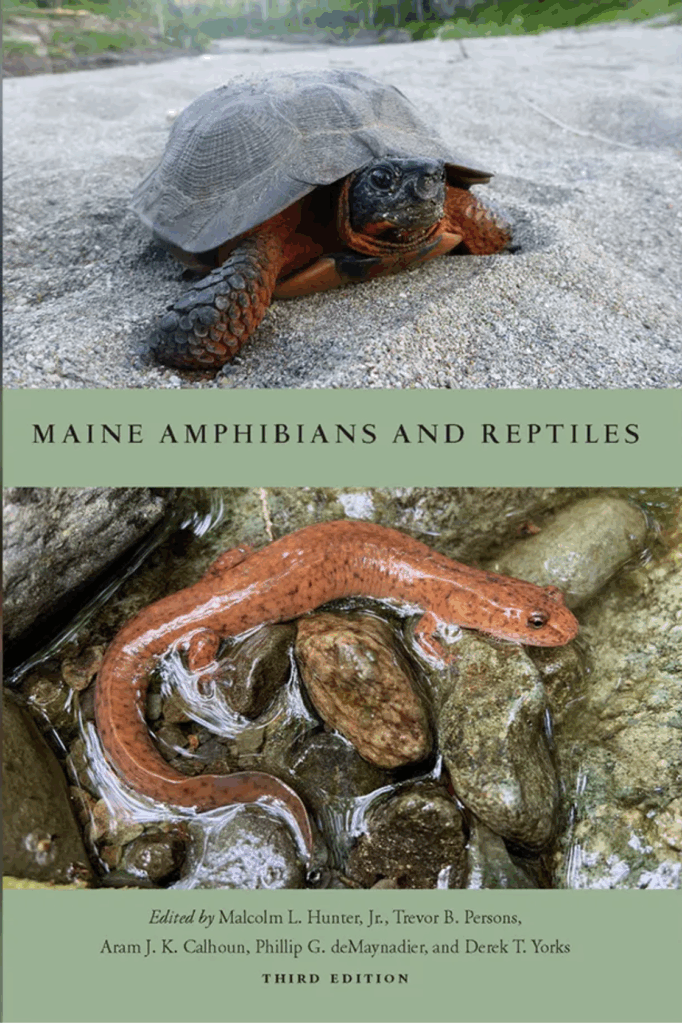
Our colleagues in Maine have just published the third edition of Maine Amphibians and Reptiles. It is an excellent book packed with lots of detailed life history information on their native reptiles and amphibians. We have almost the same species here in Vermont that Maine does, but they have a few sea turtles that we don’t have, and we have a few species (Jefferson Salamander, Northern Map Turtle, Spiny Softshell, Common Five-lined Skink, and Central Ratsnake) that they don’t have. I have just finished reading their entire guide page by page and picked up some very helpful new information. You can purchase a copy through Brickyard Books for $32.
We Now Have an Instagram Account
Kate Kelly has been taking the information in our Herp Updates and sending it out through our Facebook account. She recently created a Herp Atlas Instagram account as well. If you are interested in seeing our Instagram posts or sharing them with your friends and family, you can follow us at https://www.instagram.com/vtherpatlas.


